

Major vernacular publisher alleges coordinated raids and economic coercion; government denies claims, citing statutory violations
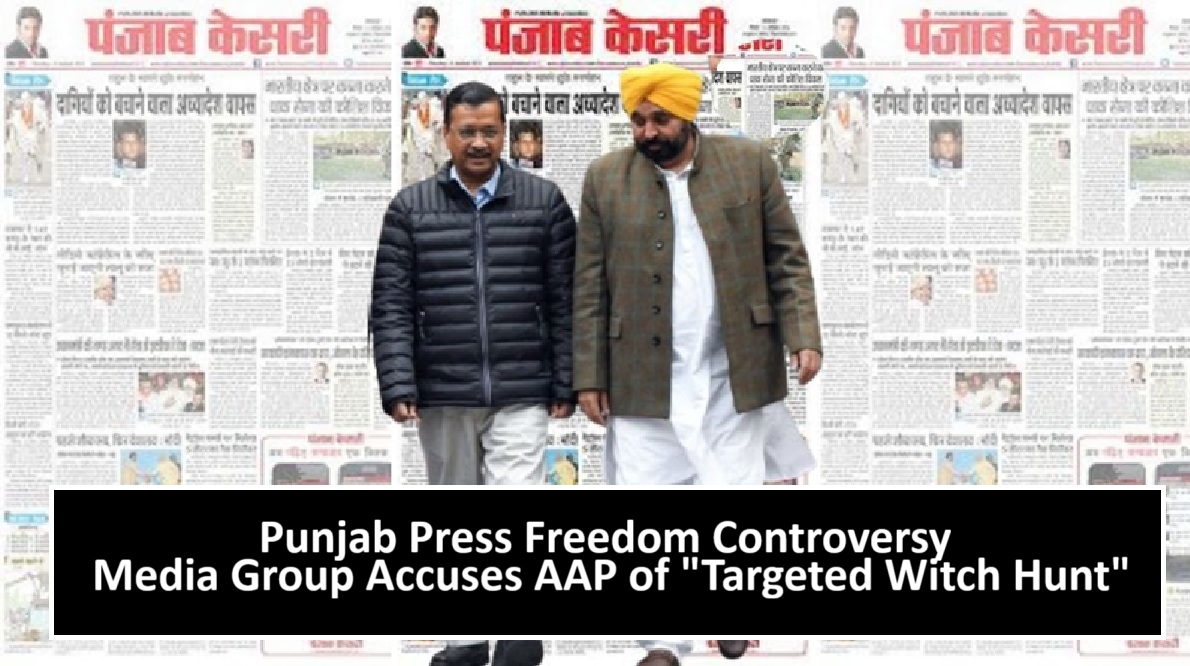
The Punjab Kesari Group, one of the state’s largest vernacular media houses, has escalated its accusations against the AAP government, alleging a systematic campaign to suppress its editorial independence. In a formal letter to Punjab Governor Gulab Chand Kataria, the group claimed the state administration has launched a “targeted witch hunt” involving multiple raids and withdrawal of government advertising in retaliation for critical reporting.
The Allegations
The Punjab Kesari Group—publisher of prominent Hindi and Punjabi dailies including Punjab Kesari, Navodaya Times, Hindi Samachar, and Jag Bani—has accused the AAP government of economic coercion following “balanced and fair” coverage of opposition allegations against AAP national convenor Arvind Kejriwal in October 2025. The group stated that the government ceased all advertising placements after this reporting, seeking to financially cripple its operations.
The controversy intensified following a wave of regulatory action. Between January 11 and January 15, 2026, the group reported nine separate raids and enforcement actions across its printing facilities in Ludhiana, Jalandhar, and Bathinda, as well as its hotel properties. Authorities from the FSSAI, GST, and Excise departments conducted these simultaneous operations.
“A targeted witch-hunt of this nature—where various departments, with a predetermined intent, are disrupting our operations—clearly reflects an intent to intimidate,” the group wrote in its letter. The publishers expressed concern that these actions threaten to halt printing operations entirely and noted heavy police deployment outside their press facilities.
Highlighting the democratic implications, the group referenced the approaching state assembly elections and warned that interference with press freedom “would seriously undermine democracy in Punjab.” They requested the governor conduct an inquiry and take corrective action.
Government’s Counter-Narrative
The Punjab government rejected the accusations as a “vendetta narrative,” issuing a press release asserting that all enforcement actions were based on legitimate statutory violations. Government officials emphasized that multiple departments independently identified concrete breaches of law requiring intervention.
Specific violations cited by the administration included excise law violations at a hotel operated by the group in Jalandhar, where authorities discovered 800 liquor bottles stored in unapproved locations. The government also highlighted environmental violations, including the discharge of untreated effluents into sewer lines.
“Freedom of the press does not extend to violations of excise, environmental or labour laws,” the government stated, drawing a distinction between protecting editorial independence and enforcing regulatory compliance.
Political Opposition
The controversy has drawn sharp criticism from opposition parties. Both the BJP and Congress condemned the government’s actions, characterizing them as an assault on press freedom and democratic principles. Their statements underscore growing concerns about the state’s administrative approach to media oversight.

The Broader Context
The timing of these events adds political significance, occurring as Punjab prepares for state assembly elections. The confrontation reflects broader tensions in Indian media landscapes regarding the balance between regulatory enforcement and editorial autonomy—a balance that rights groups and democratic institutions continue to grapple with across the country.
The unfolding situation raises fundamental questions about whether regulatory actions can be separated from political motivations, and whether the government’s enforcement claims are sufficient to justify the coordinated nature and intensity of the raids. Independent verification of the competing claims remains pending, with civil society observers likely to scrutinize developments closely as the matter proceeds.




Leave a Reply