

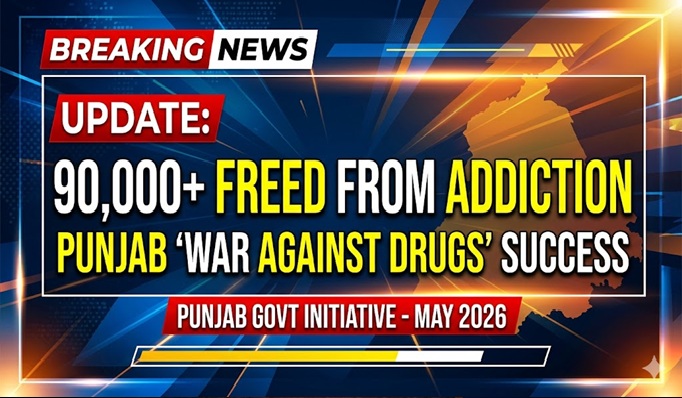
CHANDIGARH – A concerted effort by the Punjab government to tackle the state’s drug crisis has yielded significant results, with official reports confirming that over 90,000 individuals have been successfully treated for substance abuse under the ongoing “War Against Drugs” (Yudh Nashean Virudh) campaign.
Launched on March 1, 2025, the initiative has transitioned from a purely punitive strategy to a holistic, health-first model. Between its inception and May 2026, thousands of individuals sought care at state-run de-addiction and Outpatient Opioid Assisted Treatment (OOAT) centres, marking a major milestone in the state’s fight against narcotics.
A Three-Pillar Approach
State Health and Family Welfare Minister, Dr. Balbir Singh, emphasized that the campaign’s durability rests on three foundational pillars: prevention, effective medical treatment, and social reintegration.
“Our approach is not limited to law enforcement,” Dr. Singh stated. “While we continue to dismantle illicit networks and prosecute smugglers, our primary goal is to treat those affected with dignity and provide them with a clear path back to a healthy, productive life.”
The government maintains that the recovery process is most effective when combined with family support and early intervention from the community.
Recognizing the Warning Signs
To aid in early identification, health experts involved in the campaign have outlined a clear set of behavioural and physical markers that families should monitor:
-
Behavioural Red Flags: Sudden mood swings, unexplained irritability, a sharp decline in academic or work performance, social withdrawal, and secrecy.
-
Financial & Social Shifts: Frequent, unexplained requests for money and a sudden change in peer groups.
-
Physical Indicators: Neglect of personal hygiene, persistent fatigue, bloodshot eyes, and significant shifts in appetite or sleep patterns.
Empowering Families: A Call to Action
The government has urged parents to move away from stigmatizing addiction, advising them to prioritize “calm, sensitive, and supportive” dialogue over confrontation.
Recommended Guidelines for Families:
-
Foster Connection: Spend quality time with youth to build trust and open lines of communication.
-
Stay Informed: Be aware of children’s activities and the social circles they frequent.
-
Encourage Engagement: Promote participation in sports, cultural activities, and community events to provide healthy outlets.
-
Seek Professional Help Early: Do not wait for a crisis to escalate; consult with psychologists or medical professionals at the first sign of struggle.
Testimonials of Recovery
The success of the initiative is reflected in the lives of those who have navigated the path to sobriety.
“There was a time when I had given up hope,” shared one survivor from Amritsar, who utilized government-supported care. “The staff at the de-addiction centre treated me with dignity, and today, I am moving toward a new, healthy future. Freedom from addiction is possible if you have the courage to take that first step.”
As the state moves forward, the Bhagwant Mann administration has reiterated its commitment to sustaining this momentum. By combining law enforcement with a robust, empathy-driven healthcare framework, officials aim to permanently shift the tide, ensuring that every affected individual in Punjab has access to the support required to rebuild their life.








Leave a Reply