

Major Development Push Promises Investment Surge, Infrastructure Overhaul, and Job Creation as State Heads Toward Assembly Elections
Punjab is poised for a transformative year in 2026, with the state government unveiling an ambitious development agenda that promises to reshape infrastructure, boost investment, and create thousands of jobs ahead of the February 2027 assembly elections.
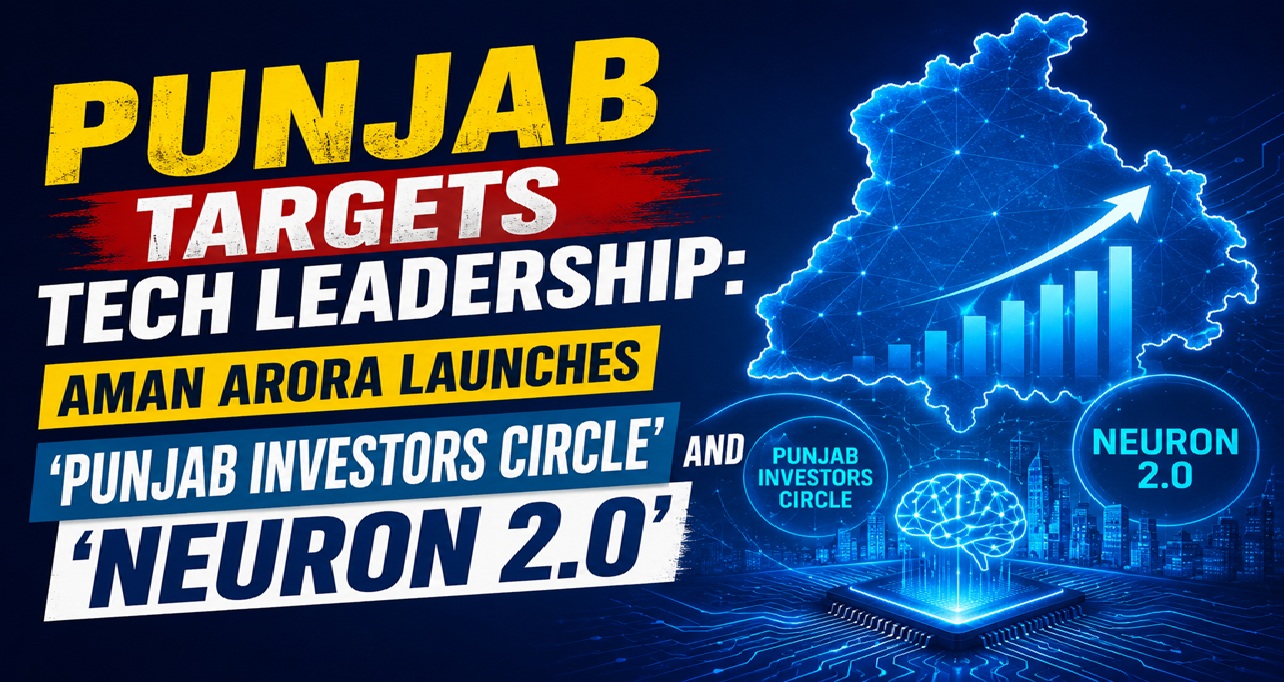
Chief Minister Bhagwant Mann and Industry Minister Sanjeev Arora have spearheaded an aggressive investment drive, conducting industrial roadshows across multiple states as well as Japan and South Korea. The stage is set for the Progressive Punjab Investment Summit in March, expected to unlock significant capital inflows and position the state as a premier investment destination.

Investment Surge Signals Economic Growth
Punjab’s investment momentum has been remarkable. Over the past four years, the state has attracted investments exceeding ₹1.50 lakh crore, a figure poised to climb significantly in 2026. Leading the charge is IT giant Infosys Limited, which has committed ₹300 crore for expanding operations in Mohali. The project is expected to generate 2,500 direct jobs and 210 indirect positions, providing a substantial boost to the state’s employment landscape. MSMEs have also announced ₹770 crore in fresh investments.
Transportation Revolution: Roads and Rails
The transformation of Punjab’s transportation infrastructure is well underway. The central government has inaugurated and laid foundation stones for 29 highway projects worth ₹4,000 crore, promising smooth, uninterrupted traffic flow and enhanced goods transport efficiency.
The flagship Ludhiana-Bathinda Greenfield Expressway, a 75.54-kilometer six-lane corridor valued at ₹2,461.64 crore, is advancing rapidly with 95 percent land acquisition completed. Construction has resumed under the Hybrid Annuity Model, bringing this crucial component of the Bharatmala project closer to completion.
The eagerly awaited Delhi-Katra Expressway is expected to reach Ludhiana by year’s end, with over 95 percent of work completed up to Malerkotla and 66 percent between Malerkotla and Ludhiana. This expressway will provide a faster, safer route for travelers heading toward Delhi and Gurugram, significantly reducing travel time.
Meanwhile, the Ferozepur-Patti rail project, spanning 25.72 kilometers at a cost of ₹764 crore, will connect the Malwa and Majha regions, substantially reducing travel time between Ferozepur and Amritsar.
Modern Transport Hubs Taking Shape
Ludhiana is set to emerge as a modern transport hub. The city’s Halwara International Airport, built on 162 acres at an approximate cost of ₹200 crore, is on the verge of becoming operational. Air India-Vistara has already committed to operating two daily flights to Delhi, marking a significant milestone for air connectivity in the region.
A state-of-the-art modern railway station in Ludhiana, valued at ₹529 crore with 60 percent work already completed, is targeted for completion by December 2026. The facility will feature airport-like amenities, including modern waiting areas, digital information systems, and comfortable platforms.
Healthcare Access Reaches Underserved Regions
The PGI Satellite Centre in Ferozepur is under construction at an accelerated pace and is expected to be inaugurated in March 2026. This long-awaited facility will bring world-class healthcare to residents of Ferozepur, Sri Ganganagar, Abohar, Fazilka, Muktsar, Faridkot, and Moga, eliminating the need for patients to travel to PGI Chandigarh for specialized treatment.
Sports Infrastructure Expansion
Punjab’s commitment to sports development is unmistakable. The state will have 3,100 new stadiums operational by June 2026, thanks to a ₹1,350 crore investment. Complementing this initiative, state-of-the-art gyms equipped with modern facilities including weightlifting sets, benches, dumbbells, and floor mats will be established at 3,000 locations, with the first phase covering 1,000 sites at a cost of ₹35 crore. Additionally, 17,000 sports kits valued at ₹50 crore will be distributed to athletes across the state.
Rural Development Accelerates
The “Badalde Pind, Badal da Punjab” (Changing Villages, Changing Punjab) scheme, backed by a ₹3,500 crore budget, will accelerate village development across 12,581 settlements. The initiative prioritizes basic facilities including electricity, water, and roads, while emphasizing village beautification and infrastructure improvement.
Village link roads are receiving special attention, with 25,547 kilometres of new roads to be constructed at a cost of ₹16,209 crore. This comprehensive roadwork addresses years of deterioration in rural connectivity. Contractors will assume maintenance responsibility for these new roads over the next five years.
Holy Cities Initiative Launched
Three major religious centres—Amritsar, Anandpur Sahib, and Talwandi Sabo—have been officially designated as holy cities through government notification. These cities are slated for comprehensive development, with restrictions on the consumption and sale of meat, fish, bidis, cigarettes, tobacco, and alcohol.
In Amritsar, the Unity Mall project is set to commence at Ranjit Avenue. This innovative facility will function as a national handicrafts sales centre under the “Made in India” campaign, with permanent stalls allocated to each of Punjab’s 23 districts.
Security Enhancement at Borders
The Punjab Police is stepping up surveillance and counter-smuggling operations. Six new anti-drone systems will be installed during 2026, complementing three already operational units. These systems will strengthen border monitoring and combat the smuggling of weapons and narcotics. CCTV camera coverage in districts will also be expanded, alongside intensified crackdowns on drug trafficking networks and criminal elements.

A Vision Materializing
With assembly elections looming in February 2027, the Punjab government’s aggressive push on multiple fronts reflects its commitment to translating election-year promises into tangible development. From investment and job creation to healthcare and sports infrastructure, from rural transformation to border security, the state’s 2026 agenda promises comprehensive progress that could reshape Punjab’s economic and social landscape.
As these projects move from blueprint to reality, Punjab residents—particularly those in emerging hubs like Ludhiana—can anticipate significantly improved connectivity, healthcare access, employment opportunities, and quality of life in the months ahead.







Leave a Reply