

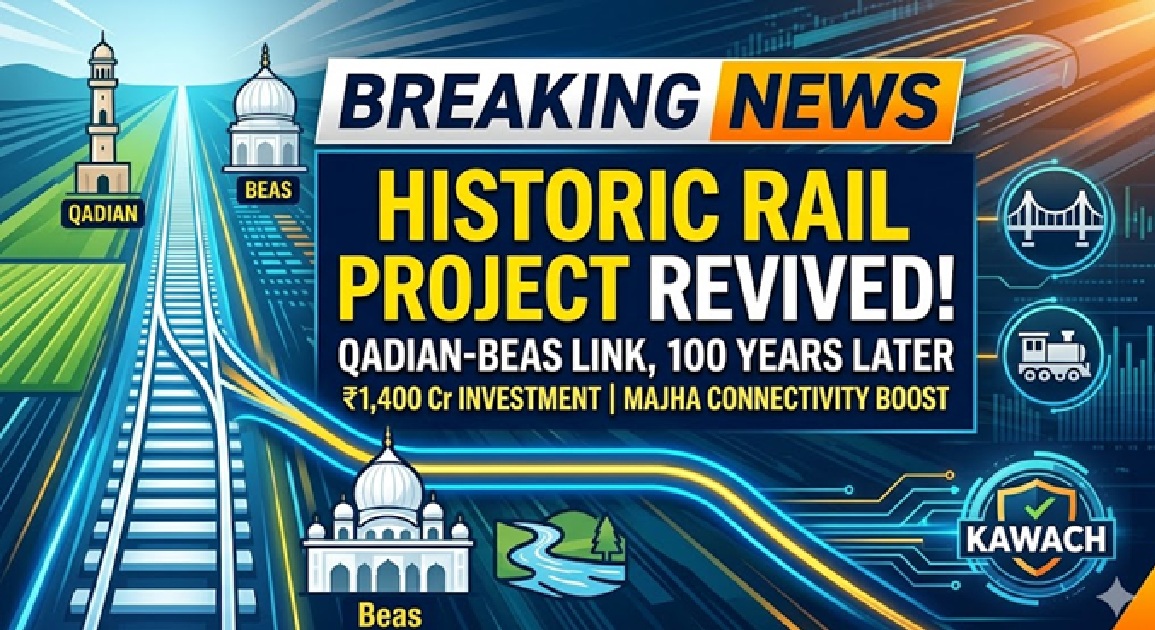
NEW DELHI – In a move poised to reshape the economic and cultural landscape of Punjab’s Majha region, the Government of India has officially announced the revival of the long-dormant Qadian-Beas New Rail Line project.
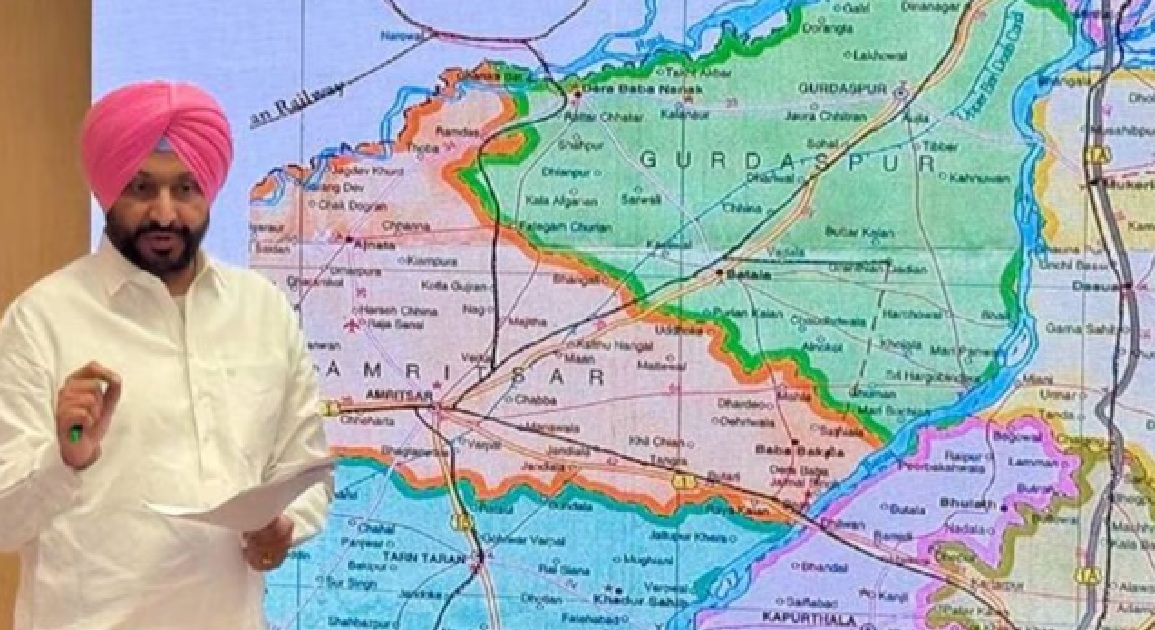
The announcement was made at Rail Bhawan by Ravneet Singh Bittu, Minister of State for Railways and Food Processing Industries. Describing the project as a “historic achievement,” the Minister expressed gratitude to Prime Minister Narendra Modi and Railway Minister Ashwini Vaishnav for their commitment to strengthening Punjab’s infrastructure.
A Century-Old Vision Realized
The ambitious project, which spans 39.68 kilometers, has a storied past. First conceptualized under British rule, the rail link was sanctioned by the North-Western Railway in 1928–29, with significant portions of the work completed by the early 1930s. However, changing priorities led to the project being shelved for decades.
Though it was briefly revived as a “Socially Desirable Rail Connectivity Project” (SDRCP) in the 2010–11 Railway Budget, procedural hurdles stalled progress. Today, with a revised cost estimate of approximately ₹1,400 crore, the project is finally back on the fast track.
Engineering for the Future
The new broad-gauge line is designed to be a model of modern engineering, implemented by Northern Railways. The project scope includes:
-
Infrastructure: Construction of 11 major bridges, 121 minor bridges, and 54 Road Under Bridges (RUB).
-
Station Development: New dedicated crossing stations at Ghuman and Butala.
-
Safety Technology: Integration of India’s indigenous train collision prevention system, KAWACH, along with state-of-the-art signaling and telecommunications.
Beyond its local utility, the line serves a critical strategic purpose. Minister Bittu highlighted that the route will act as a vital alternative to the existing Amritsar-Pathankot section, ensuring the resilience and reliability of railway operations throughout North India during emergencies.
Economic and Spiritual Connectivity
The impact of the rail link is expected to extend far beyond mere transportation. The route will pass through key towns—including Qadian, Dhapai, Ghuman, Butala, and Sathiala—connecting rural communities directly to the broader rail network.
“This project will bring wide-ranging benefits to the regional economy,” said Minister Bittu. “Farmers will gain access to better markets, trade and small industries will receive a significant boost, and new employment opportunities will be created.”
Furthermore, the rail line is set to become a lifeline for religious tourism in the region. By providing direct access to numerous spiritual sites, the project aims to simplify travel for thousands of pilgrims visiting:
-
Qadian: The historic birthplace of the Ahmadiyya Muslim community.
-
Dera Baba Jaimal Singh: The major spiritual center at Beas.
-
Sacred Sites: A host of revered locations including Sri Darbar Sahib Dera Baba Nanak, Gurdwara Bhagat Namdev Ji (Ghuman), Pandori Dham, and the Shirdi Sai Mandir in Gurdaspur.

A Path Forward
Minister Bittu concluded the announcement by congratulating the residents of the Majha region, affirming the Central Government’s dedication to a time-bound execution of the project. As the Ministry prepares to navigate the final necessary approvals, the revival of the Qadian-Beas line stands as a landmark commitment to regional development and national connectivity.











Leave a Reply