

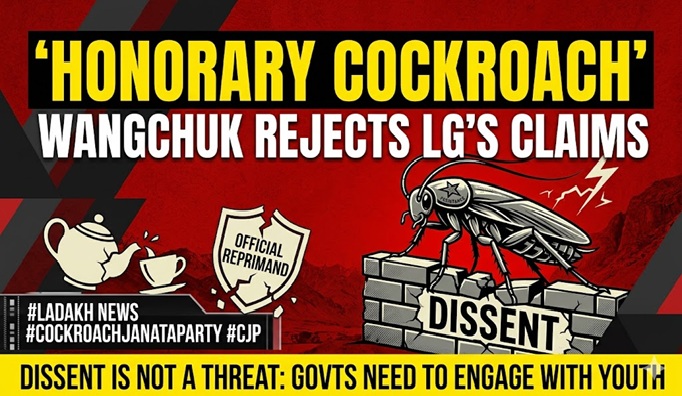
LEH — Renowned environmentalist and educator Sonam Wangchuk issued a stark appeal on Monday to Prime Minister Narendra Modi and Union Home Minister Amit Shah, urging immediate intervention in the escalating Ladakh crisis. Describing the current atmosphere as “hanging between trust and distrust,” Wangchuk warned that the continued delay in dialogue is fostering desperation in the strategically sensitive border region.
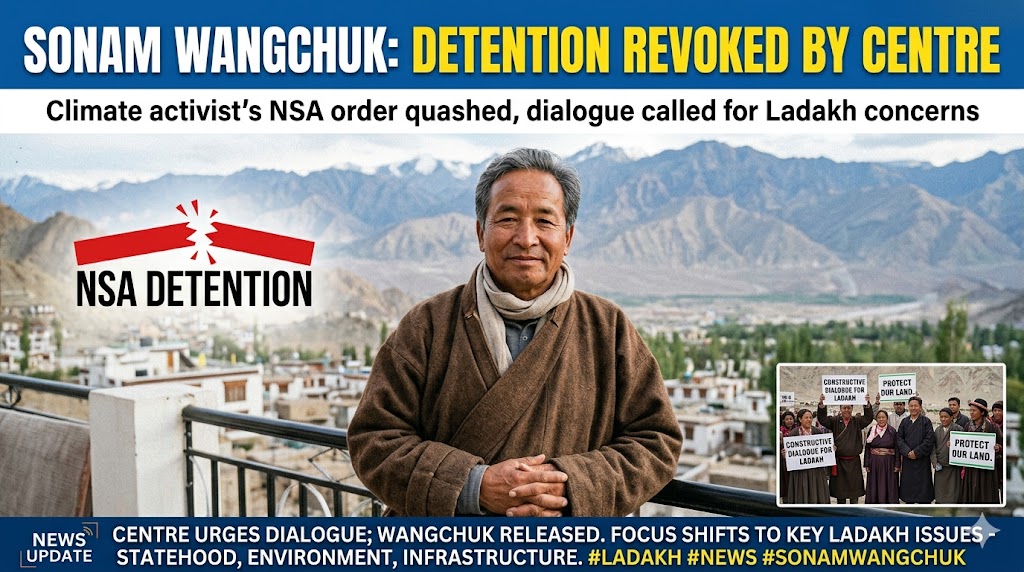
The appeal comes exactly one month after the end of Wangchuk’s detention, a period he hoped would mark a turning point for “meaningful dialogue.” Instead, he noted with regret that over two and a half months have passed since the last high-level meeting on February 4, with no date set for future talks.

A Growing Vacuum
Wangchuk expressed deep concern that the administrative silence is providing fertile ground for “mischievous elements” to create a communal rift between the Buddhist community of Leh and the Muslim community of Kargil.
“The people of this sensitive border area are feeling desperate,” Wangchuk stated. “I appeal to the Prime Minister and the Home Minister to resolve these issues as soon as possible, keeping the national interest in mind.”
The Four Pillars of Demand
The protests, spearheaded by the Leh Apex Body (LAB) and the Kargil Democratic Alliance (KDA), are anchored by four non-negotiable demands aimed at protecting the region’s unique identity and ecology:
-
Full Statehood: A transition from a Union Territory to a full-fledged State with its own legislature.
-
Sixth Schedule Status: Constitutional safeguards to grant local control over land, culture, and resources.
-
Employment Safeguards: Reservation of jobs for the youth of Ladakh.
-
Increased Representation: An additional parliamentary seat to ensure both Leh and Kargil have a voice in New Delhi.

The High Stakes of Stalemate
While government officials have previously characterized past interactions as “meaningful,” Ladakhi leadership has dismissed them as “indirect” and lacking concrete results. The central point of contention remains the Sixth Schedule. While the Union Government has hinted at “Sixth Schedule-like” protections, local leaders insist on the full constitutional provision to prevent unregulated industrial and mining activity in the ecologically fragile Himalayan landscape.
As the standoff continues, the “national interest” cited by Wangchuk looms large. In a region where civilian morale is intrinsically linked to border security, the growing sense of alienation among Ladakhis presents a challenge that New Delhi may no longer be able to ignore.
City E News Bureau









Leave a Reply