

SONAMARG – In a historic feat of engineering that defies the world’s most rugged terrain, the Zojila Tunnel is reaching its final countdown. Excavation for what will be Asia’s longest bi-directional road tunnel is expected to conclude by the first week of June, marking a pivotal moment in India’s quest for year-round connectivity to the strategic Ladakh frontier.
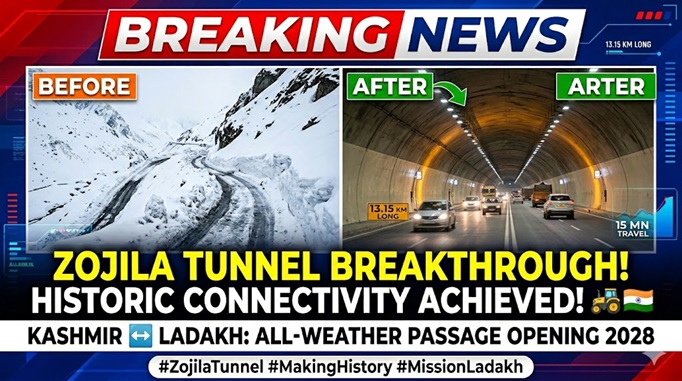
With a formal operational target of February 2028, the project is poised to permanently dismantle the “winter wall” that has historically cut off the Ladakh region from the rest of the country for six months every year.
A Strategic Lifeline in the Clouds
The Zojila Pass, situated at an altitude of over 11,500 feet, has long been a bottleneck for both national security and civilian life. Heavy snowfall and avalanches routinely shut down the pass, leaving the people of Kargil and Leh dependent on expensive air sorties for essential supplies.
The new 13.15 km horseshoe-shaped tunnel will slash travel time across the pass from a gruelling three hours to just 15 minutes.
“This is more than just concrete and steel,” noted a senior project official. “It is a lifeline that ensures a child in Dras has the same access to healthcare in January as a resident of Srinagar.”
Strengthening the “Iron Shield”
From a defence perspective, the tunnel is a game-changer. Following the lessons learned during the Galwan conflict, the need for rapid, all-weather troop mobilization became a national priority. The tunnel will allow the seamless movement of heavy artillery, tanks, and supplies to the Line of Actual Control (LAC) regardless of weather conditions.
The Engineering Battle: -45°C and Fragile Peaks
The ₹4,500 crore project is being hailed as an engineering miracle. Workers and engineers have faced “Himalayan” challenges, quite literally:
-
Extreme Weather: Temperatures regularly plummet to -45°C, freezing equipment and testing human endurance.
-
Geological Traps: The fragile rock strata of the Himalayas required the use of the New Austrian Tunnelling Method (NATM), a sophisticated technique that allows the rock to support itself during excavation.
-
Avalanche Risks: Despite a tragic avalanche in early 2023 that halted work for weeks, teams have employed advanced safety protocols to maintain the 2028 deadline.

Economic & Tourism Boom
The “Gateway to Ladakh” is expected to trigger an economic Renaissance in the region.
-
Tourism: All-weather access will turn Dras and Kargil into year-round tourist hubs rather than just transit points.
-
Cost of Living: The price of essential commodities, which usually skyrocket in winter due to limited supply, is expected to stabilize.
-
Integration: When paired with the Z-Morh, Shinku La, and Sela tunnels, the Zojila project completes a massive infrastructure web providing “plug-and-play” connectivity to India’s northernmost borders.
As the final blasts of the excavation phase echo through the Ganderbal and Minamarg portals this June, India inches closer to a future where the Himalayas are no longer a barrier, but a bridge.









Leave a Reply