

Stringent measures activated overnight as air quality deteriorates to ‘Very Severe’—second policy shift in single day
The air quality crisis in Delhi-NCR escalated dramatically on Saturday as the Commission for Air Quality Management (CAQM) implemented GRAP-4 (Graded Response Action Plan, Stage 4) restrictions—the most stringent pollution control measures available—just hours after announcing GRAP-3 in the morning.
The move came as the Air Quality Index (AQI) in Delhi soared to hazardous levels, jumping from 431 at 4 PM to 441 by 6 PM, crossing the threshold into “Very Severe” territory. The rapid deterioration underscores the severity of the ongoing pollution crisis gripping the National Capital Region.
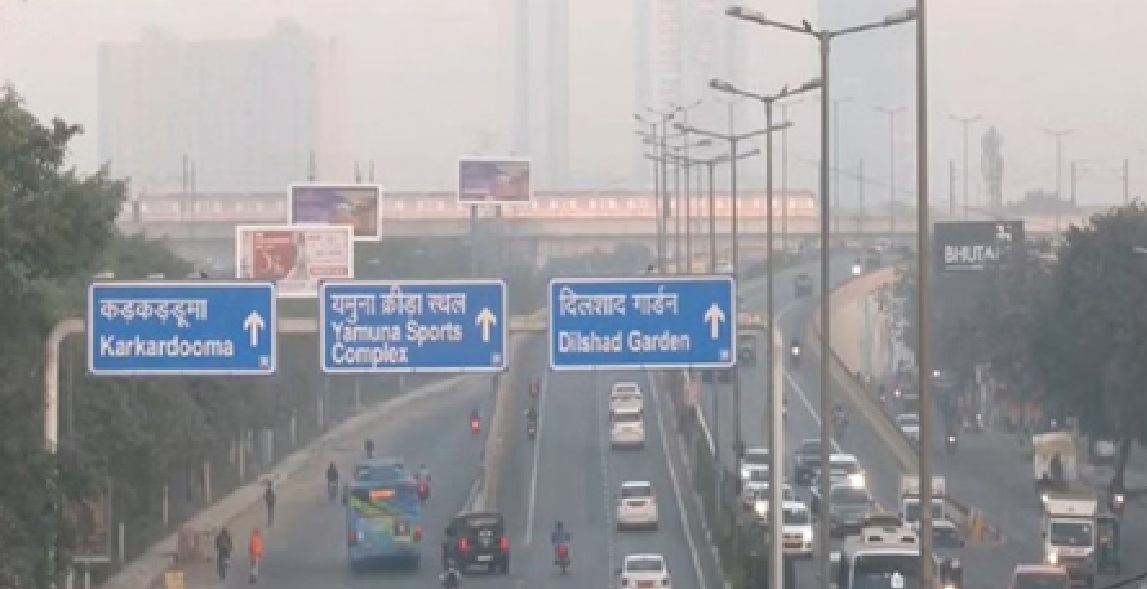
Toxic Conditions Drive Emergency Action
Meteorologists attribute the sudden spike to unfavourable weather conditions, including slow winds and a stable atmospheric layer that has trapped pollutants near ground level, preventing natural dispersion. The combination has created what officials describe as a dangerous stagnation of pollution, with no relief expected without significant weather changes.
“The situation is being continuously monitored,” CAQM officials said, appealing to residents to strictly adhere to the newly imposed restrictions and follow the GRAP Citizen Charter.
What GRAP-4 Means for Delhi-NCR
The implementation of GRAP-4 marks a dramatic escalation in restrictions across the National Capital Region. The order, effective immediately, bans virtually all construction activities and severely constrains vehicular movement and commercial operations.
Construction and Industrial Closures
All construction work is now completely prohibited, with exemptions only for critical national infrastructure projects including highways, roads, flyovers, overbridges, power distribution networks, and essential services. Stone crushers remain shuttered, and all mining and related activities are halted across the NCR.
Vehicular Restrictions Tighten
The ban on vehicular movement is now comprehensive. Trucks are prohibited from entering Delhi entirely, with exemptions granted only for vehicles carrying essential goods, CNG and electric trucks, and those equipped with BS-VI engines. Non-essential light commercial vehicles registered outside Delhi are also barred from entry, while BS-IV or older diesel heavy goods vehicles are banned from operating within the capital.
Earlier GRAP stages had already imposed a strict ban on BS-3 petrol and BS-4 diesel light motor vehicles in Delhi and surrounding districts including Gurugram, Faridabad, Ghaziabad, and Gautam Buddh Nagar. Vehicles carrying essential goods and specially adapted vehicles for persons with disabilities remain exempt.
Education and Work Arrangements
Schools face mandatory restrictions, with classes from 6th to 9th grade and 11th grade permitted only through online or hybrid (combined online and in-person) modes. Younger students up to 5th grade were already under hybrid schooling requirements from earlier GRAP stages.
Government and private offices have been directed to operate at 50 percent capacity, with remaining staff mandated to work from home. Central government employees may also be ordered to work remotely at the discretion of authorities.
Escalating Crisis Demands Public Cooperation
Beyond the hard restrictions, CAQM has issued additional advisories urging residents to minimize unnecessary travel, prioritize public transportation and carpooling, and avoid heating systems that burn coal or wood. The commission has emphasized that compliance from the public is critical to preventing further deterioration.
“The GRAP rules are in place for a reason,” officials stated. “Citizens are appealed to follow these restrictions so that pollution can be controlled.”
Understanding GRAP Stages
The GRAP framework operates on a four-stage alert system tied to AQI readings:
- GRAP-1: AQI 201-300 (Poor)
- GRAP-2: AQI 301-400 (Very Poor)
- GRAP-3: AQI 401-450 (Severe)
- GRAP-4: AQI above 450 (Very Severe)
Saturday’s rapid escalation from GRAP-3 to GRAP-4 reflects how quickly conditions can worsen, with the AQI remaining in dangerous territory and showing no signs of immediate improvement.

What’s Next?
NCR pollution control boards and concerned agencies have been instructed to expedite immediate preventive action to halt further air quality decline. However, without favourable meteorological conditions to disperse pollutants, relief may remain elusive in the coming days.
Residents are advised to monitor official updates from CAQM and local authorities, limit outdoor activities, and use appropriate protective equipment when venturing outside. The situation remains fluid, and officials have indicated that restrictions could be adjusted based on real-time air quality data.





Leave a Reply