

NEW DELHI — Meta Chief Executive Officer Mark Zuckerberg has offered a formal apology to the Indian government following high-level discussions regarding severe content moderation failures, the proliferation of child sexual abuse material (CSAM), and deepfake content on its platforms.
The diplomatic and regulatory breakthrough occurred during a crucial meeting in New Delhi between senior Meta executives—including Chief Global Affairs Officer Joel Kaplan—and top officials from the Ministry of Electronics and Information Technology (MeitY).
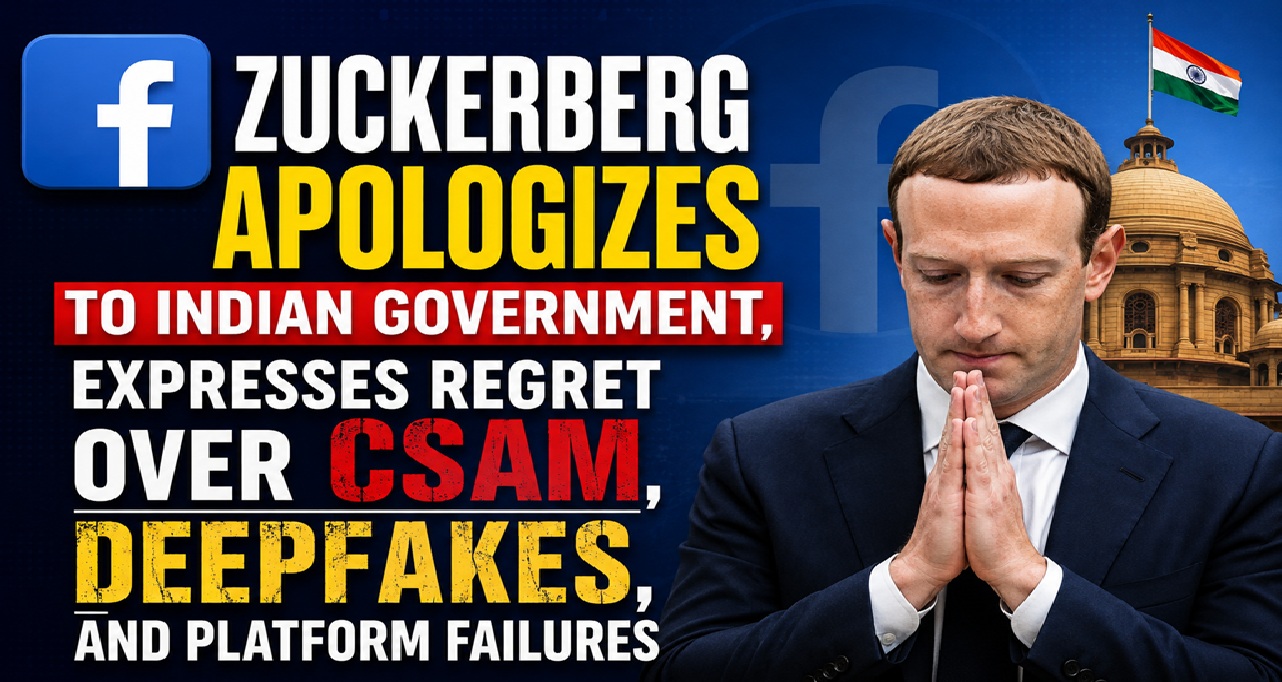
According to government sources, Zuckerberg expressed deep regret over operational errors and systemic oversights across Facebook, Instagram, and WhatsApp. Furthermore, Meta leadership acknowledged that substantial capital investments had inadvertently amplified harmful and illegal content by heavily boosting specific categories through automated algorithmic systems.
The Catalyst: The PM Modi Video Controversy
The high-stakes confrontation was heavily fuelled by a major diplomatic incident involving the temporary removal of a video featuring Prime Minister Narendra Modi discussing youth affairs and paper leak regulations.
The takedown triggered swift bipartisan fury, culminating in a strict ultimatum from the Parliamentary Standing Committee on Communications and Information Technology. The committee demanded an unconditional apology from Zuckerberg personally, warning that failure to do so could result in immediate legislative action to strip the company of its legal immunities.
While Meta initially attributed the takedown to a routine technical glitch and automated AI filtering errors, Kaplan formally delivered Zuckerberg’s apology to IT Minister Ashwini Vaishnaw during their deliberations.

Threat to “Safe Harbour” Status
Beyond the immediate apologies, the meetings marked a critical turning point regarding how social media companies are regulated in India.
MeitY officials issued a stern warning that Meta’s legal protection as an “intermediary” under the Information Technology Act is under active review. The government argued that because Meta’s algorithmic recommendation and monetization engines actively curate, promote, and dictate which content is served to users, the platform behaves more like a publisher than a passive host.
Under current Indian legal frameworks, the “safe harbour” provision shields social media giants from criminal liability for user-generated content, provided they comply with strict due diligence. However, government sources indicated that systemic failures regarding CSAM and manipulated deepfake media may invalidate Meta’s immunity, opening the door to unprecedented regulatory penalties and direct liability.







Leave a Reply