

Delhi Court’s Refusal to Take Cognizance Provides Relief to Sonia and Rahul Gandhi
NEW DELHI — In a significant development in the controversial National Herald case, the Rouse Avenue Court in Delhi on Tuesday refused to take cognizance of the Enforcement Directorate’s (ED) petition related to money laundering allegations, drawing sharp reactions from the Congress party, which termed the case as a “story of political vendetta and harassment.”
The court’s decision has provided substantial relief to Congress leaders Sonia Gandhi and Rahul Gandhi, who were named as accused in the money laundering case. While the ED’s investigation into the matter can continue, the court’s refusal to proceed with the charge sheet marks a major setback for the federal agency.
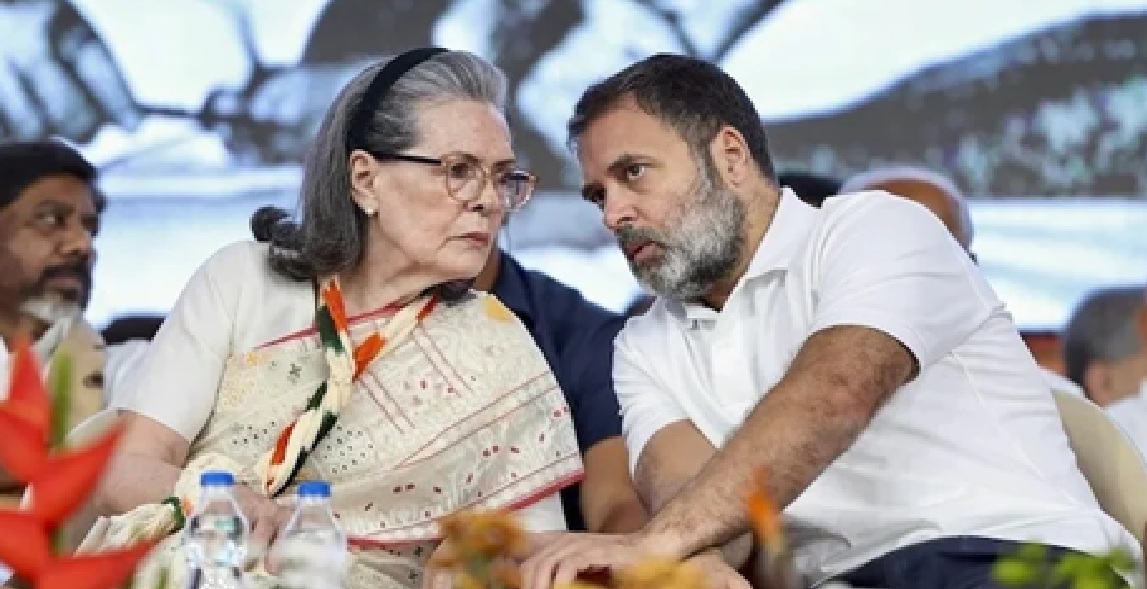
Congress Welcomes Court’s Decision
Congress President Mallikarjun Kharge declared the court’s decision as a vindication of truth, stating, “They are doing this for political revenge. This case has been fabricated only to harass the Gandhi family. No FIR has been registered in this case. Our motto is ‘Satyameva Jayate’ (Truth alone triumphs), and we welcome this decision.”
Senior Congress leader Abhishek Singhvi echoed similar sentiments, characterizing the case as “a story of political vendetta and harassment.” He emphasized that “the law has spoken louder than the noise,” suggesting that the court’s action vindicated the party’s position on the matter.
Court’s Clarification on ED’s Status
While refusing to take cognizance of the charge sheet, the court clarified that the ED retains the freedom to continue its investigation into the allegations. Importantly, the court noted that the ED’s case is based on a private complaint filed by BJP leader and prominent lawyer Subramanian Swamy and magistrate’s summons orders, rather than on any formal First Information Report (FIR).
The ED had alleged that Sonia Gandhi and Rahul Gandhi misappropriated assets worth Rs 2,000 crore belonging to Associated Journals Limited (AJL). However, the court’s refusal to take cognizance suggests the magistrate found insufficient grounds to proceed with formal proceedings based on the evidence presented.
Background: The National Herald Case
The National Herald case has its roots in India’s independent media history. Associated Journals Limited (AJL) was established on November 20, 1937, by India’s first Prime Minister Pandit Jawaharlal Nehru, with the objective of publishing newspapers in multiple languages. The company published the National Herald in English, Navjivan in Hindi, and Qaumi Awaz in Urdu. Though Nehru played a foundational role, he never owned the company; instead, it was supported by 5,000 freedom fighters who served as shareholders.
By the 1990s, the newspapers began incurring substantial losses. By 2008, AJL had accumulated a debt exceeding Rs 90 crore. The company subsequently ceased newspaper publication and diversified into the property business.
The Allegations
In 2012, Subramanian Swamy filed a case against Sonia Gandhi, Rahul Gandhi, Motilal Vora, Oscar Fernandes, journalist Suman Dubey, and technocrat Sam Pitroda. Swamy alleged that Young India Limited (YIL), a company controlled by the Gandhi family, had fraudulently acquired the assets of the defunct media outlet to gain access to assets and profits worth over Rs 2,000 crore.
Specifically, Swamy claimed that YIL had paid only Rs 50 lakh to acquire the rights to recover Rs 90.25 crore that AJL owed to the Congress party—funds originally given as a loan to establish the newspaper. He further contended that the loan itself was improper, having been taken from party funds.

Significance of the Court Order
The Rouse Avenue Court’s decision represents a procedural hurdle for the ED, though it does not amount to a complete dismissal of the matter. The ED can continue its investigation, but the court’s refusal to take cognizance indicates that the magistrate was not persuaded to register formal criminal proceedings based on the charge sheet presented.
The decision is likely to provide political ammunition to the Congress party, which has consistently maintained that the case is a tool of political harassment. Meanwhile, the BJP and the ED may pursue further legal remedies or continue their investigation to gather additional evidence.
The case continues to remain a flashpoint in India’s political landscape, with both sides firm in their respective positions.




Leave a Reply