

New rural employment scheme replaces MNREGA, sparking fierce political confrontation
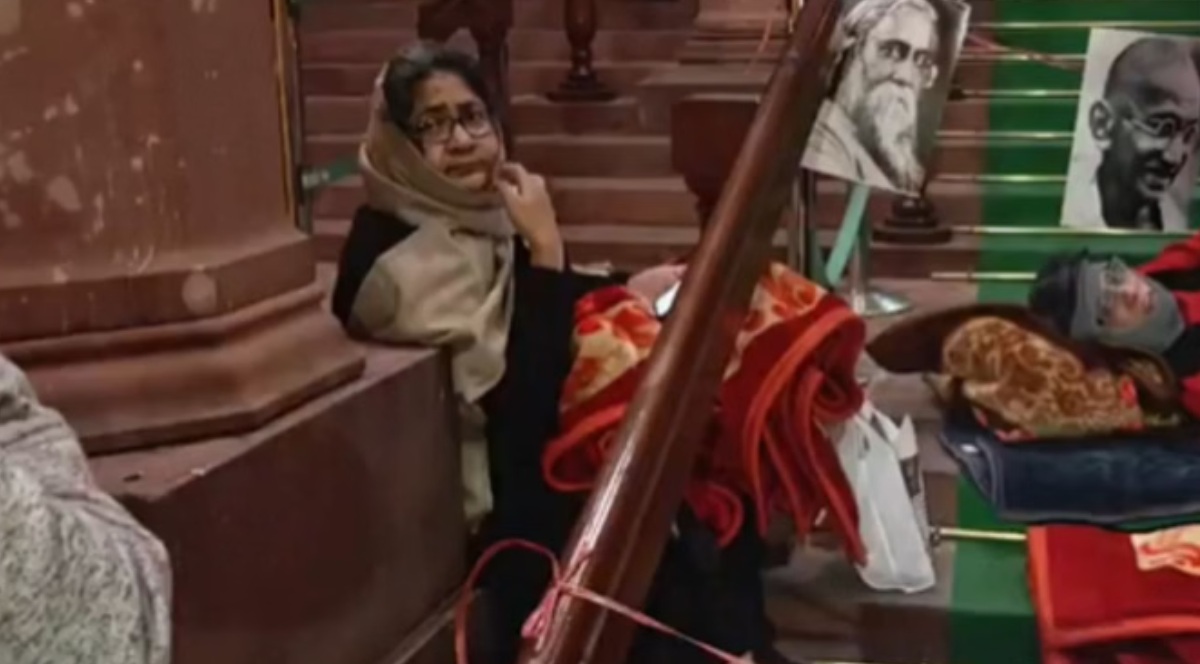
New Delhi — In a dramatic display of parliamentary discord, opposition parties staged an all-night sit-in protest outside Parliament immediately after the Developed India Guarantee for Employment and Livelihood Mission (Rural), commonly known as the G RAM G Bill 2025, was passed by the Rajya Sabha in the early hours of the morning. The bill, which the government touts as a modernized approach to rural employment, has ignited one of the year’s most contentious legislative battles.
Bill Passes After Midnight Voice Vote
The G RAM G Bill was approved by the Rajya Sabha following midnight through a voice vote, after the Lok Sabha had already given its assent. The legislation will replace the Mahatma Gandhi National Rural Employment Guarantee Act (MGNREGA), a decades-old scheme that currently guarantees 100 days of employment to rural families annually. Under the new framework, rural households will be entitled to 125 days of wage employment per year for unskilled labour.
The funding structure divides responsibility between central and state governments at a 60:40 ratio, with north-eastern and hilly states receiving a more favourable 90:10 split to account for geographical challenges.
Opposition’s Scathing Critique
As soon as the bill passed, members of Congress, Trinamool Congress, and DMK immediately began a dharna (sit-in protest) in the Parliament complex, vowing to challenge the legislation both inside and outside the legislative chambers.
Trinamool Congress Rajya Sabha Deputy Leader Sagarika Ghosh levelled serious accusations against the government, calling the bill “anti-poor, anti-farmer, and anti-labour.” She alleged that the Modi administration had “forcibly” passed a major piece of legislation with minimal notice to opposition parties. “This is the murder of democracy,” Ghosh declared, pointing out that the bill had been introduced with only five hours’ advance notice to the opposition, leaving insufficient time for meaningful debate or scrutiny.
Ghosh further argued that a bill of such magnitude should have been referred to a select committee to ensure comprehensive consideration of all stakeholders’ perspectives. She warned that opposition parties would mobilize nationwide protests in response to the legislation.
Congress Launches Powerful Counter-Attack
Congress President Mallikarjun Kharge launched an impassioned critique of the government’s move, emphasizing the human cost of the policy shift. “A scheme on which the livelihoods of 120 million people depend is being scrapped,” Kharge stated, drawing parallels to the government’s withdrawal of the three controversial farm laws following sustained protests.
Congress MP Pramod Tiwari went further, pledging that when his party returns to power, the MGNREGA scheme would be restored along with Mahatma Gandhi’s name. Congress leader Randeep Singh Surjewala called it “the saddest day for the country’s laborers,” encapsulating the opposition’s view that vulnerable rural populations would bear the brunt of this policy transformation.
Tumultuous Parliamentary Scenes
The bill’s passage was marked by significant disruption within Parliament itself. During Lok Sabha discussions, opposition MPs chanted slogans condemning the removal of Mahatma Gandhi’s name from the employment guarantee scheme and staged a walkout in protest. The scenes reflected the depth of antagonism between the ruling coalition and opposition parties over what both sides view as a fundamental question about India’s commitment to its poorest citizens.
Government’s Défense
Union Agriculture Minister Shivraj Singh Chouhan countered the opposition’s criticism, framing the G RAM G Bill as beneficial legislation designed to enhance rural welfare and expand employment opportunities. He emphasized that the increased allocation of 125 days of employment—a 25-day increase from MGNREGA’s guarantee—represents a genuine improvement for rural workers.
The government’s position centres on modernizing an aging scheme to better address contemporary rural employment challenges, though it has not adequately addressed opposition concerns about the sudden implementation and limited consultation process.

Road Ahead
With Parliament’s approval now complete, the bill will proceed to the President for formal assent, clearing its final legislative hurdle. However, the opposition has made clear that the parliamentary battle represents merely the opening chapter of a larger confrontation.
Opposition parties have vowed to continue their fight beyond Parliament, promising to mobilize grassroots campaigns and nationwide protests against what they characterize as an attack on democracy and the rural poor. The G RAM G Bill thus emerges as one of the year’s most polarizing legislative moments, setting the stage for a sustained political struggle over the future of rural employment guarantees in India.





Leave a Reply