

Buoyed by strong performance in local body elections, Aam Aadmi Party shifts focus to strengthen rural base ahead of 2027 assembly elections
The Aam Aadmi Party (AAP) has initiated a significant strategic shift in Punjab, with Chief Minister Bhagwant Mann set to lead an intensive grassroots campaign across the state’s villages. This move comes in the wake of the party’s dominant performance in the recent Zila Parishad and Panchayat Samiti elections, where it emerged as the clear victor across rural constituencies.
The Electoral Landscape: Why Rural Areas Hold the Key
Punjab’s political future is predominantly shaped by its rural electorate. The state’s villages are home to over 1.36 crore voters, representing approximately 63.55 percent of the total state electorate. This substantial proportion makes rural voters the decisive factor in all major electoral contests, prompting all major political parties to campaign extensively in these areas.
The recent local body elections underscored the critical importance of rural engagement. All political parties launched vigorous campaigns targeting village voters, recognizing that success in these constituencies directly translates to broader electoral strength.
AAP’s Dominant Performance: A Landslide Victory
The Aam Aadmi Party’s performance in the Zila Parishad and Panchayat Samiti elections has provided compelling evidence of its growing influence in rural Punjab. The party’s dominance was unmistakable across both electoral contests.
In the Zila Parishad elections, AAP secured an commanding 62.82 percent of the total vote share, establishing itself as the overwhelming choice of rural voters. The Congress party trailed significantly with 17.87 percent, followed by the Shiromani Akali Dal (SAD) with 13.26 percent. The Bharatiya Janata Party (BJP) received 2.02 percent, Independents secured 2.88 percent, and the Bahujan Samaj Party (BSP) garnered just 0.86 percent of the vote.
The Panchayat Samiti elections revealed a similar trend, with AAP capturing 53.95 percent of the vote. Congress received 21.53 percent, SAD accumulated 15.82 percent, Independents secured 5.07 percent, BJP obtained 2.57 percent, and BSP registered 0.99 percent of the vote share.
Party Expectations and Strategic Assessment
While the Aam Aadmi Party’s electoral victories were indisputably substantial, party sources revealed that AAP leadership had harboured even greater expectations for the election results. The party had hoped to secure an even higher vote percentage than what was ultimately achieved, indicating an ambitious outlook among AAP’s top brass.
Despite this slight shortfall from internal projections, these election results have reinforced AAP’s conviction that its political base is steadily strengthening across Punjab’s villages. The significant lead over competing parties has convinced the party that its rural strategy is gaining traction among voters.
AAP’s New Strategic Initiative: The CM Dialogue Program
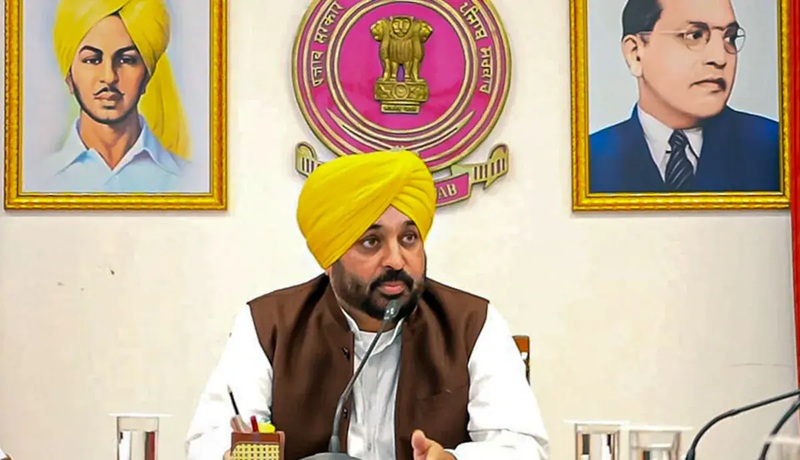
Recognizing the momentum from these local elections and the critical importance of the 2027 assembly elections, the Aam Aadmi Party has unveiled a restructured approach to consolidate and expand its rural footprint. At the heart of this new strategy is an aggressive outreach campaign led directly by Chief Minister Bhagwant Mann.
The CM Dialogue Program
The centrepiece of AAP’s revised strategy is an expanded CM Dialogue initiative. Through this program, Chief Minister Bhagwant Mann will undertake extensive tours across Punjab’s villages, engaging in direct interaction with local residents. These dialogues are designed to serve multiple strategic objectives simultaneously.
During these village visits, the Chief Minister will prioritize listening to the grievances and complaints of rural residents, addressing their concerns and creating a platform for direct governance feedback. This grassroots engagement approach aims to demonstrate the government’s responsiveness to village-level issues.
Beyond addressing grievances, CM Mann will utilize these interactions to communicate AAP’s developmental achievements over the past four years. The government plans to highlight specific rural development initiatives undertaken since 2021, emphasizing improvements to villagers’ standard of living and infrastructure development in rural areas.
Key Government Initiatives to Be Promoted
The CM Dialogue program will also serve as a platform to inform villagers about the government’s ambitious roadmap for overall state development. Significantly, the Chief Minister will use these village interactions to introduce and promote the upcoming CM Health Scheme, a landmark healthcare initiative designed to provide cashless medical treatment coverage up to Rs. 10 lakh to all eligible residents.
Additionally, CM Mann will provide assurances that the state government will maintain adequate funding for all ongoing development projects, reassuring villagers about the government’s commitment to rural transformation and sustained investment in local infrastructure.
Strategic Goals and Electoral Implications
Through this intensive village engagement campaign, the Aam Aadmi Party aims to substantially strengthen its hold on rural voters before the crucial 2027 assembly elections. By positioning Chief Minister Bhagwant Mann as an accessible leader committed to listening to and addressing village-level concerns, AAP hopes to convert its local body election momentum into sustained electoral support.
The timing of this strategy is significant, as it provides approximately two years for the party to build on its rural base and solidify voter loyalty ahead of the next major electoral contest.
Opposition Parties Respond: Congress and Shiromani Akali Dal
While the Aam Aadmi Party emerged decisively from the local body elections, the opposition parties have offered contrasting assessments of their own performances.
The Congress party and the Shiromani Akali Dal, despite not achieving major electoral victories in these contests, have struck a relatively optimistic tone. Leaders from both parties have expressed enthusiasm regarding their candidates’ performances in the elections, particularly given their status as opposition parties competing without governmental machinery.
Neither party expressed severe disappointment with their respective vote shares, suggesting that they view the results as respectable efforts against a ruling party with significant administrative advantages. However, both Congress and SAD leadership have raised concerns about the electoral process itself.
Opposition leaders have alleged that victory margins were extremely narrow in numerous constituencies, suggesting that results could have differed substantially with different circumstances. More significantly, both parties have made serious allegations that their candidates were prevented from filing nominations in some localities due to alleged coercion and intimidation. They further claim that nominations for several of their candidates were cancelled, and argue that, had these nominations been permitted, the overall electoral results would have reflected a more competitive contest.

Looking Ahead: The 2027 Assembly Elections
As Punjab looks toward the 2027 assembly elections, the state’s political landscape appears to be firmly cantered on rural constituencies. AAP’s dominant performance in local body elections has established it as the current ruling force in village-level politics, while opposition parties are strategizing their own approaches to regain lost ground.
The Aam Aadmi Party’s decision to intensify Chief Minister Bhagwant Mann’s village engagement represents a calculated investment in converting structural rural advantage into sustained electoral dominance. With over two years before the next assembly elections, all parties will continue competing intensively for the support of Punjab’s 1.36 crore rural voters, whose ballots will ultimately determine the state’s political direction.
This development underscores the enduring importance of grassroots politics in Indian democracy, where direct engagement with village voters remains a fundamental strategy for building and maintaining electoral coalitions.










Leave a Reply