

BATHINDA, PUNJAB — With a stated goal of total eradication, Punjab Chief Minister Bhagwant Singh Mann has ordered an immediate and aggressive intensification of the state’s ‘War on Drugs’ campaign. During a high-level virtual review meeting with Deputy Commissioners (DCs) and Senior Superintendents of Police (SSPs), the Chief Minister reaffirmed his administration’s ‘Zero Tolerance’ policy, signalling a push for even stronger action against drug trafficking networks.
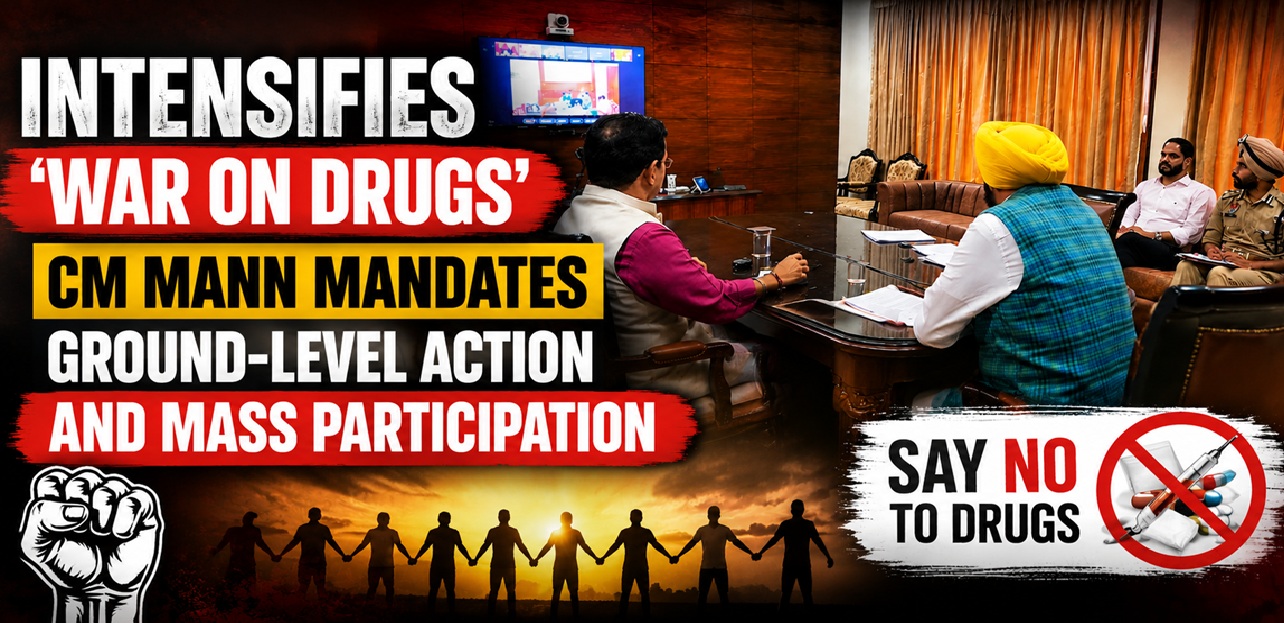
Breaking the Supply Chain
The Chief Minister reported significant success in crippling the state’s drug trade, asserting that the administration has successfully disrupted supply lines and incarcerated major traffickers—the “big fish”—behind the illegal trade.
“The supply line of drugs has already been broken,” the Chief Minister stated, while emphasizing that the current momentum must be maintained until Punjab is completely free from the scourge. He underscored that saving the state’s youth remains the government’s top priority, calling for “innovative thinking” among officers to move beyond conventional methods.
Grassroots Empowerment: The VDC Model
A central pillar of the Chief Minister’s strategy is the mobilization of Village Defence Committees (VDCs). Currently, a force of 1.5 lakh members is active across the state. In just the last three months, these committees have filed over 13,000 complaints against peddlers, showcasing the power of community-led vigilance.
To ensure the continued success of the VDCs, the government has mandated:
-
Monthly Accountability: Mandatory monthly meetings for every VDC, with performances to be personally reviewed by the Chief Minister at state-level sessions.
-
Total Confidentiality: Strict protections to ensure the identities of VDC members and informants remain anonymous.
-
Active Engagement: Police teams have been directed to conduct regular visits to villages, fostering trust and ensuring residents feel empowered to report illegal activities.
Massive Expansion of Rehabilitation Services
Recognizing that suppressing the drug supply must be matched by robust support for those in recovery, the government has undertaken a significant expansion of its de-addiction infrastructure:
-
Increased Capacity: Government-run de-addiction and rehabilitation centres have seen their total bed capacity surge from 1,500 to 5,000.
-
OAT Centre Upgrades: The network of Outpatient Opioid Assisted Treatment (OAT) centres has been expanded from 529 to 565 locations.
-
Improved Quality of Life: Existing facilities have been modernized, with upgrades including air conditioning and a guaranteed, consistent supply of essential medicines.
The ‘Soorma’ Initiative
In a unique social rehabilitation effort, the state has launched the ‘Soorma’ program. This initiative honours individuals who have conquered drug addiction and remained clean for over two years. These “heroes” are being appointed as ‘Nasha Mukti De Doot’ (Ambassadors of a Drug-Free Life).
These ambassadors will now collaborate with the government to provide mentorship, de-stigmatize recovery, and inspire others to exit the “quagmire of drugs.”

A Call for a Mass Movement
Chief Minister Mann described the fight as an “extraordinary battle” that requires more than just police action—it requires a statewide social movement.
“Drugs are a social problem, and public participation is vital,” the Chief Minister said. By combining aggressive enforcement, community monitoring, and holistic support for recovery, the government aims to channel the energy of Punjab’s youth into a future defined by progress rather than addiction.










Leave a Reply