

Joint Lashkar-e-Taiba and ISKP Base Destroyed in Surghar; Regional Tensions Reach Critical Level
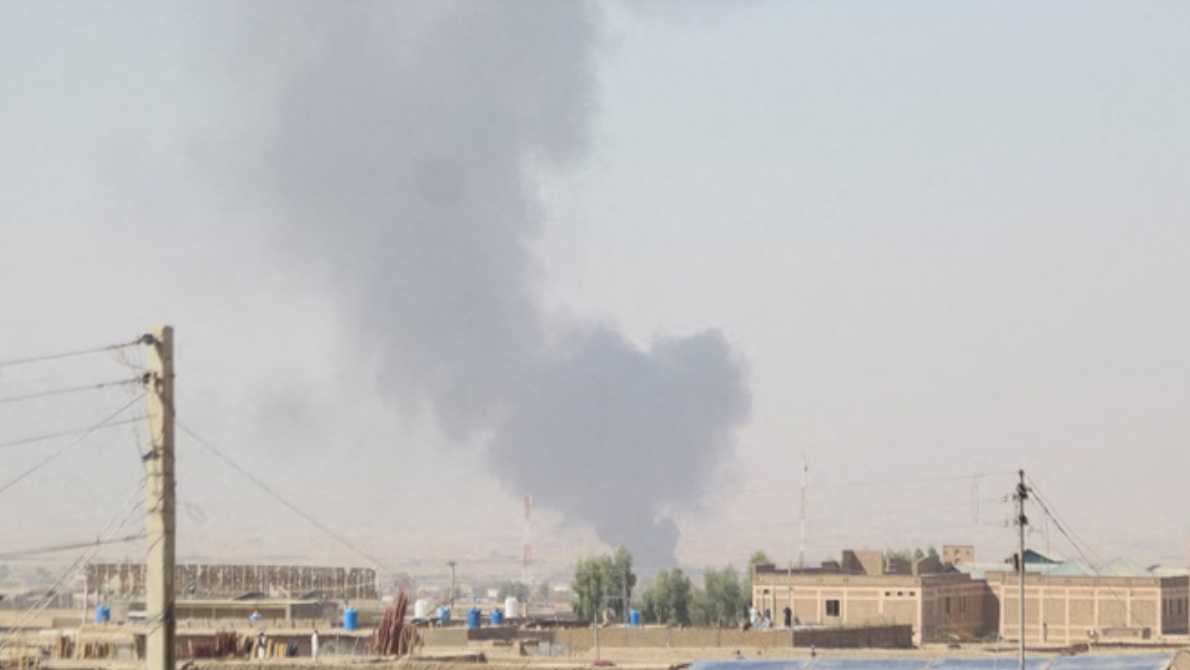
In a significant military operation conducted on February 26, 2026, the Afghan military launched a coordinated retaliatory strike against Pakistani military infrastructure along the contested Durand Line border. According to the Afghan Defence Ministry, the operation successfully destroyed a joint terrorist hideout in the Surghar area of Khyber District, Khyber Pakhtunkhwa province, marking a major tactical victory in the ongoing regional conflict.
Details of the Strategic Operation
The targeted facility served as a joint operational base for Lashkar-e-Taiba (LeT), a Pakistan-based militant organization, and the Islamic State Khorasan Province (ISKP). According to Afghan security
sources, the base had been used to coordinate attacks against Afghan territory.
What distinguished this operation was the deployment of advanced military technology. Afghan forces utilized a mortar-mounted drone equipped with a state-of-the-art COTSAC platform, reducing the terrorist installation to ruins. The precision strike exemplified the technical capabilities now available to Afghan forces.
The operation commenced at 9:00 p.m. local time on Thursday and concluded at 1:00 a.m. Indian Standard Time on Friday. During this four-hour window, Afghan forces executed simultaneous attacks across multiple strategic sectors along the 2,611-kilometer border.
Coordinated Multi-Sector Campaign
The military campaign was not limited to a single location. Afghan forces coordinated attacks across five critical border zones: Paktia-Kurram, Kunar-Bajaur, Nangarhar-Torkham, Khost-Miranshah, and the
adjacent areas of Paktika-South Waziristan. According to initial reports, Pakistani military infrastructure sustained substantial losses across these multiple fronts.
Stated Rationale and Context
The Afghan government characterized this military action as a direct response to what it described as Pakistani violations of Afghan sovereignty. Afghan officials emphasized that the operation targeted
military infrastructure used to stage attacks on Afghan soil. This assertion places the operation within the broader context of escalating tensions over border security and cross-border militant activities.
Pakistani Military Response
Pakistan responded swiftly to the Afghan offensive. According to security officials in Islamabad, Pakistani military forces unleashed artillery fire in retaliation, intensifying tensions throughout the
region. The exchange marked a significant escalation in the ongoing conflict, with both sides engaging in active military operations.
The Role of ISKP in Regional Instability
The Islamic State Khorasan Province represents a significant complication in Afghanistan’s security landscape. The militant organization maintains an ideological rivalry with the Taliban, the de
facto rulers of Afghanistan. While the Taliban seeks to consolidate Islamic rule within Afghanistan’s borders, ISKP pursues a transnational agenda cantered on establishing a global caliphate.
Intelligence assessments suggest that ISKP operates under substantial Pakistani support, particularly through Pakistan’s Inter-Services Intelligence (ISI). The organization has conducted suicide attacks
against civilian targets and religious sites in efforts to challenge Taliban authority. ISKP has also been credited with attacks targeting foreign nationals in Kabul, moves analysts suggest are designed to
undermine international confidence in Taliban governance and deter foreign investment.
Since taking power in August 2021, Taliban intelligence services have conducted extensive crackdowns against ISKP infrastructure. The latest Afghan military operation represents a new phase in this conflict,
extending counterinsurgency efforts beyond Afghanistan’s borders.
Durand Line Dispute and Regional Tensions
The current crisis occurs within the broader context of the Durand Line dispute, a century-old border demarcation that has long been contested. Afghanistan has never formally recognized this border, arguing it represents a colonial imposition that artificially divided ethnic Pashtun populations. Pakistan, conversely, maintains it represents the legitimate international boundary.
A primary concern for Pakistan has been the harbouring of the Pakistan Taliban (TTP) and other militant organizations in Afghan territory. Pakistan contends that the Taliban government has failed to implement meaningful restrictions on these groups, leading to attacks within Pakistan. Afghan officials counter that Pakistan has historically used such groups as proxy forces to project power within Afghanistan.
International Dimension and Outlook
The escalation between Pakistan and Afghanistan has drawn international attention, with regional powers and global observers monitoring developments closely. The conflict carries implications for regional stability, particularly given the proximity to disputed Kashmir and the broader South Asian security environment.
Military analysts note that both nations have been exchanging competing claims regarding casualties and territorial gains. Afghanistan claims to have eliminated 55 Pakistani militants and captured 13 military
outposts, while Pakistan asserts it inflicted substantial casualties on Afghan forces and destroyed multiple Taliban positions.

As of February 28, 2026, both nations remain in a state of heightened military alert. International diplomatic channels are reportedly engaged in efforts to prevent further escalation, though prospects for immediate de-escalation remain uncertain. The incident underscores the persistent security challenges confronting Afghanistan and Pakistan, challenges that continue to defy conventional diplomatic solutions.
This report compiled from official statements, security sources, and international news agencies.





Leave a Reply