

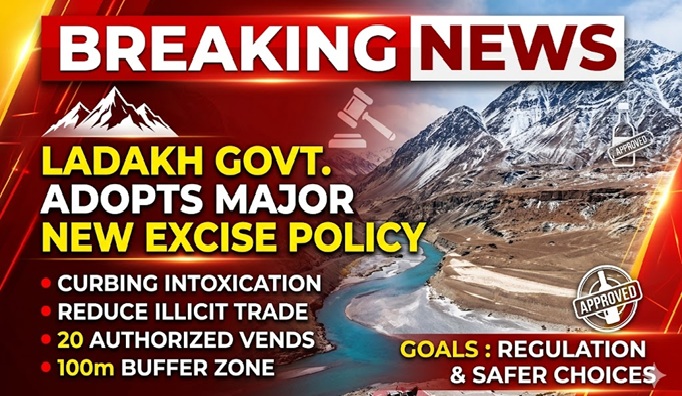
LEH, Ladakh – In a significant administrative shift, the Union Territory of Ladakh has officially approved a transformative new excise policy designed to modernize alcohol regulation, curb the rise of illicit substance abuse, and stimulate the region’s vital tourism sector.
The policy, signed into effect today by Lieutenant Governor Vinai Kumar Saxena, marks a departure from the previously restrictive system. By replacing limited availability with a transparent, regulated marketplace, the government aims to address the public health risks associated with the consumption of unregulated spirits and narcotics.
A Strategic Pivot Toward Regulation
For years, the limited availability of authorized liquor in Ladakh created an “artificial scarcity,” which officials identified as a primary driver behind the surge in illicit liquor trade and the adoption of more dangerous intoxicants.
“The objective is two-fold: to offer safer, regulated choices to both residents and tourists while simultaneously dismantling the black market,” an official statement from the UT administration read.
Key Reforms at a Glance
The new framework introduces several structural changes to ensure transparency and accessibility:
-
Retail Expansion: The number of authorized retail vends will increase from a mere two to 20, with all locations to be determined through a transparent e-auction process.
-
Geographic Equity: Access to legal, regulated beverages will be extended to remote areas including Nubra, Changthang, Sham, and Zanskar, ensuring broader coverage across the union territory.
-
Diversified Licensing: The policy extends licensing opportunities to guest houses, homestays, and microbreweries, allowing the hospitality sector to cater to international and domestic tourist expectations.
-
Administrative Efficiency: The licensing process has been significantly streamlined; the documentation requirement has been reduced from 16 to 6, and the mandatory, often lengthy, “District Administration Opinion” has been abolished.
Strengthening Enforcement and Sustainability
While opening the market, the government has implemented rigorous safeguards to ensure public safety and environmental responsibility:
-
Zero-Tolerance for Plastic: To protect Ladakh’s fragile mountain ecosystem, the sale of liquor in plastic bottles is strictly prohibited. Retailers must adhere to approved glass or recyclable container standards.
-
Price Control: Retailers are prohibited from selling above the Maximum Retail Price (MRP). The administration has warned that any deviation will result in immediate license cancellation.
-
Standardization: A uniform excise duty of ₹500 per LPL (London Proof Litre) will be applied to all Indian Made Foreign Liquor (IMFL) brands, ensuring a predictable revenue stream and a level playing field for vendors.
-
Public Safety Buffers: All licensed vends are required to maintain a minimum distance of 100 meters from sensitive areas, including schools, religious institutions, hospitals, and public parks.

A Boost for Tourism
As Ladakh continues to cement its status as a premier global travel destination, the administration expects these reforms to have a positive economic ripple effect. By allowing hotels and guest houses to serve a wider array of beverages, the region aims to meet the standards of global tourism infrastructure while simultaneously generating increased tax revenue for developmental projects.
With the new policy now in force, the Ladakh administration is expected to begin the e-auction process for the new licenses in the coming weeks, signalling a new era of regulated commerce for the Union Territory.




Leave a Reply