

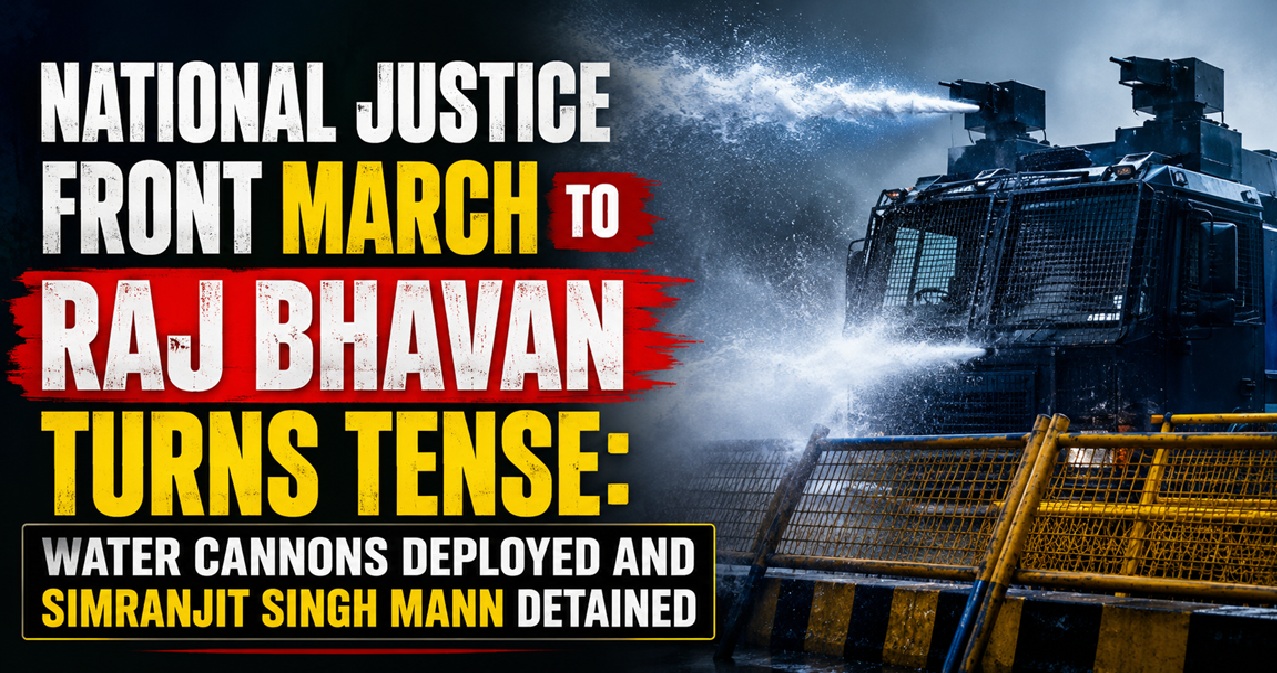
CHANDIGARH — The Independence Day march organized by the National Justice Front toward the Raj Bhavan in Chandigarh escalated into a tense standoff on Saturday, August 15, as police deployed water cannons, tear gas shells, and heavy barricades to halt the demonstrators.
The protesters, who gathered near the YPS Chowk in Mohali before pushing toward the union territory, are pressing for key demands, including the release of detained Sikhs and parole for Jagtar Singh Hawara.
Escalation and Law Enforcement Response
In anticipation of the march, the Chandigarh and Mohali police established stringent security cordons, deploying additional forces across all major arterial routes connecting Mohali to Chandigarh. As crowds advanced and attempted to breach security lines, the situation grew volatile.
Law enforcement officials responded by firing tear gas shells and utilizing water cannons to disperse the gathering. The blockade and subsequent clashes caused significant traffic disruptions throughout key transit corridors between the twin cities.
To manage the crowd, Chandigarh Police utilized innovative measures, broadcasting appeals for peace and announcements regarding administrative readiness for dialogue via drone-mounted loudspeakers, alongside strict warnings against attempts to breach public order.
High-Profile Detentions
Amidst the heightened security sweep, Shiromani Akali Dal (Amritsar) President Simranjit Singh Mann was taken into custody by the Chandigarh Police near the Raj Bhavan premises. Visuals from the scene indicated he had a bandage tied around his head at the time of his detention.

Current Security Measures
Authorities continue to maintain an aggressive security posture. Section 163 has been strictly enforced across Mohali, with law enforcement agencies utilizing continuous monitoring systems and heavy patrols to oversee crowd movements and prevent further escalation.









Leave a Reply