

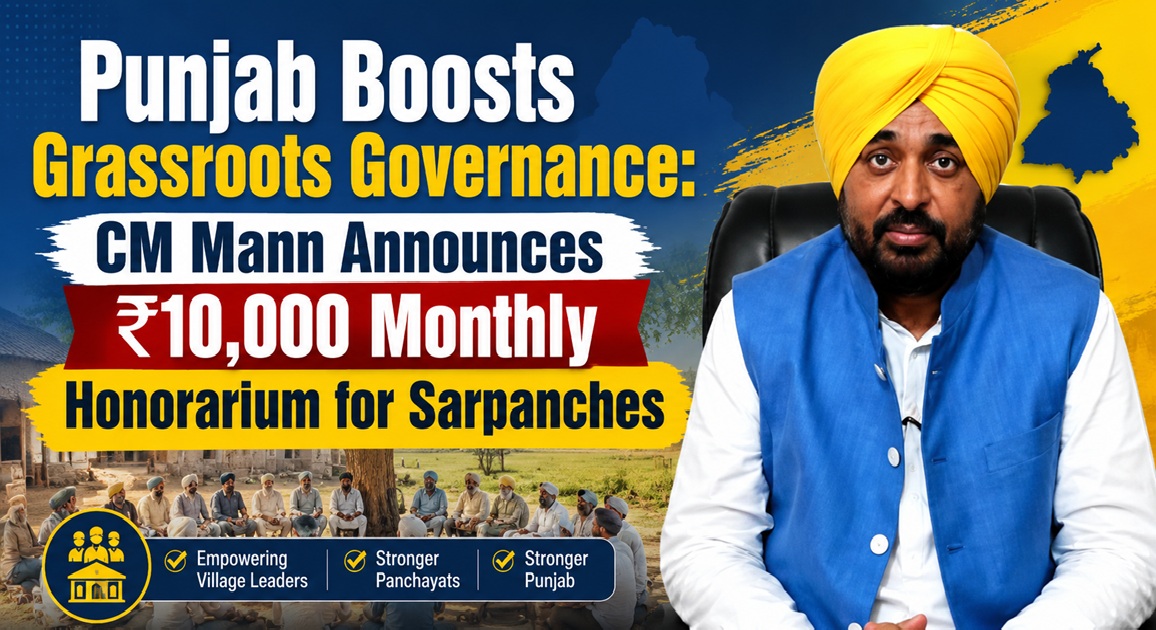
CHANDIGARH – In a significant move aimed at strengthening the foundational tier of democracy, Punjab Chief Minister Bhagwant Mann announced on Wednesday that the state government is increasing the monthly honorarium for Sarpanches to ₹10,000.
The enhanced pay structure is set to take effect on Independence Day, August 15, 2026, marking a major policy shift for rural administration in the state.
Empowering the “First Tier of Democracy”
Addressing the significance of the decision, Chief Minister Mann emphasized that the village Panchayat serves as the bedrock of the country’s democratic framework. He noted that Sarpanches work tirelessly—often day and night—to ensure the welfare of their communities and to drive local development.
“If our villages progress, Punjab will develop,” the Chief Minister stated. He underscored that the decision reflects his government’s commitment to providing a “respectable” honorarium that acknowledges the dedication of village leaders, ensuring they are adequately supported in their roles.
A “Historic” Initiative
The announcement drew immediate praise from Aam Aadmi Party (AAP) National Convener Arvind Kejriwal, who congratulated the Sarpanches of Punjab.
In a statement, Kejriwal hailed the decision as “historic,” noting that this is the first time in the country that village heads are receiving a consistent, standardized monthly salary of this nature. He commended the Bhagwant Mann government for prioritizing grassroots empowerment, framing the initiative as a hallmark of the AAP’s governance model.

Strengthening Rural Infrastructure
This salary hike is the latest in a series of initiatives by the Punjab government designed to bolster rural governance. Beyond direct financial support for elected officials, the state has actively promoted village unity through schemes such as the Mukh Mantri Pind Ekta Samman, which awards a ₹5 lakh grant to villages that elect their Panchayats unanimously.
By elevating the financial status of Sarpanches, the state government aims to attract more dedicated individuals to local leadership, ultimately fostering a more efficient and responsive administrative system at the village level.











Leave a Reply