

Chandigarh: Despite repeated warnings and government campaigns, Punjab continues to choke under the smoke of stubble fires. The state has recorded 308 incidents of stubble burning between September 15 and October 19, according to data from the Punjab Pollution Control Board (PPCB). The worst-hit districts are Tarn Taran (113 cases) and Amritsar (104 cases), turning these regions into pollution hotspots.
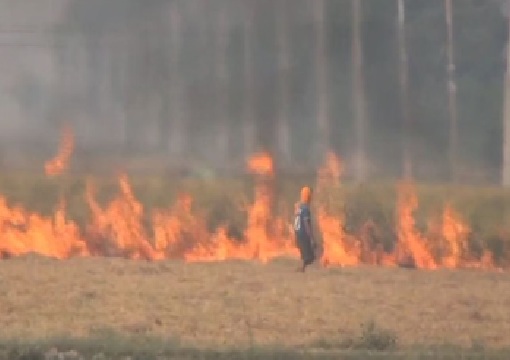
Farmers, in a rush to clear their fields for the upcoming Rabi sowing season, continue to defy government appeals and legal action. In total, 147 FIRs have been registered, and environmental fines worth over ₹6.5 lakh have been imposed—of which ₹4.70 lakh has already been recovered.
Tarn Taran, Amritsar Lead in Violations
The PPCB data paints a grim picture. Apart from Tarn Taran and Amritsar, Ferozepur (16 cases), Patiala (15), and Gurdaspur (7) also reported stubble fires. Authorities admit that despite sustained awareness drives, many farmers prefer to burn residue due to limited turnaround time between paddy harvest and wheat sowing.
Officials say stubble burning remains one of the major contributors to the toxic smog that engulfs Delhi-NCR every winter.
Government Crackdown: FIRs and Fines
The Punjab Police have intensified action under Section 223 of the IPC (disobedience to orders promulgated by public servants). Of the 147 FIRs, 61 were filed in Tarn Taran and 37 in Amritsar alone. Officials claim strict monitoring is underway, and drone surveillance has been deployed in several districts.
Despite these measures, fires continue to rise—indicating that legal deterrents alone may not be enough without stronger policy incentives for farmers to adopt crop residue management machinery.
Sharp Decline Since Last Year—but the Challenge Persists
Interestingly, Punjab has seen a 70% reduction in stubble burning incidents over the past year. In 2024, the state reported 10,909 cases, compared to 36,663 in 2023 and a staggering 71,304 in 2021. However, experts warn that even a few thousand fires can severely affect air quality across northern India.
Officials Hit the Ground
In a proactive move, SSP Aditya and Deputy Commissioner Dalwinderjit Singh visited Sohal village to prevent post-harvest burning. The officials reported that 80% of the harvest has been completed in the area without any reported fire incidents.
Deputy Commissioner Dalwinderjit Singh said, “We interacted with farmers and discussed alternatives. They’ve requested a relaxation period between harvesting and sowing to reduce pressure for burning. We will forward their demand to the government.”
The Gurdaspur Police have conducted 270 awareness meetings with farmer groups, while enforcement teams of the Punjab Protection Force continue to patrol agricultural zones.


The Road Ahead
Despite the reduction in cases, the recurring fires signal deep-rooted systemic issues—ranging from inadequate machinery support to narrow crop cycles. Experts argue that without a long-term crop diversification strategy and stronger incentives, Punjab will continue to battle its annual smog crisis every harvest season.









Leave a Reply