

Punjab’s skies are turning grey and its air increasingly toxic. The state witnessed a sharp spike in stubble burning this weekend — a menace that’s once again threatening to blanket the region in a suffocating haze.
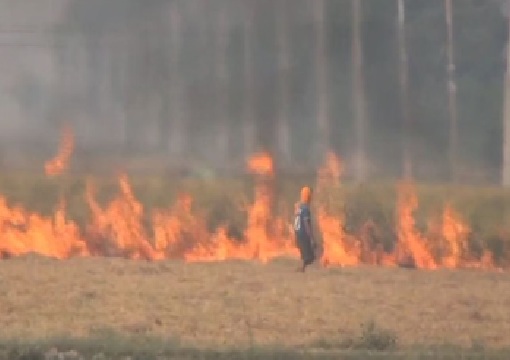
On Sunday, Punjab recorded 122 new farm fire incidents, the highest single-day count of this season, taking the total tally to 743. In contrast, only 28 cases were reported on Saturday — highlighting an alarming overnight surge. Experts warn that as paddy harvesting accelerates, these fire cases are likely to explode in the coming days, further choking Punjab’s already fragile air quality.
Despite the smoke plumes rising across the fields, the Air Quality Index (AQI) in most cities remained below 200 for now — but officials admit it’s only a matter of time before pollution levels cross the danger mark.
Tarn Taran Tops the List
The latest satellite data paints a grim picture. Tarn Taran has emerged as the new epicenter of stubble burning with 224 cases, overtaking Amritsar (154). Following them are Ferozepur (80), Sangrur (47), Patiala (39), and Gurdaspur (38). Smaller but concerning numbers were also recorded in Bathinda (19), Fazilka (13), Jalandhar (13), Ludhiana (8), Moga (8), Mansa (8), Muktsar (10), and Faridkot (10) among others.
Tarn Taran Reports 28 New Fires in a Single Day
On Sunday alone, Tarn Taran registered 28 stubble burning cases, the highest in the state. Chief Minister Bhagwant Mann’s home district Sangrur followed with 19 fires, while Amritsar reported 10. Smaller yet significant incidents were detected across Bathinda (6), Fatehgarh Sahib (7), Gurdaspur (9), Ferozepur (11), and several others.
Officials Appeal, Farmers Unmoved
As the flames spread, district administrations are scrambling to contain the crisis. Ferozepur Deputy Commissioner Deepshikha Sharma urged farmers to stop burning stubble and adopt sustainable alternatives like in-situ and ex-situ residue management.
She said farmers are being trained and provided machinery at subsidized rates to manage stubble scientifically. Farmers such as Gurjinder Singh (Vakil Wala) and Bagicha Singh (Isa Panj Garai) have already prepared their fields for wheat without burning residue — using mulchers, rotavators, and super seeders.
Officials from the Agriculture Department continue to visit villages to encourage similar practices. However, despite awareness drives and government subsidies, the fire count continues to rise — exposing Punjab’s deep-rooted dependence on burning crop residue as a quick fix.

What Lies Ahead
With over 700 fire incidents already reported and paddy harvesting still underway, Punjab’s air quality could deteriorate rapidly in the coming week. Environmentalists warn that unless the government acts swiftly with strict enforcement and on-ground monitoring, Punjab could soon be staring at a public health emergency.










Leave a Reply