

Anantnag — In a landmark development for Kashmir’s logistics infrastructure, the Food Corporation of India (FCI) has successfully dispatched its first dedicated food grain train to the valley, marking a significant stride toward strengthening the region’s food security and supply chain networks.
The train, carrying approximately 1,384 tons of food grains across 21 BCN wagons, departed from Ajitwal railway station in Punjab’s Ferozepur division and is set to arrive at the newly developed Anantnag Goods Terminal in South Kashmir on Sunday, December 21. The arrival represents a historic milestone in connecting Kashmir to India’s national freight transport network and modernizing the region’s logistics capabilities.
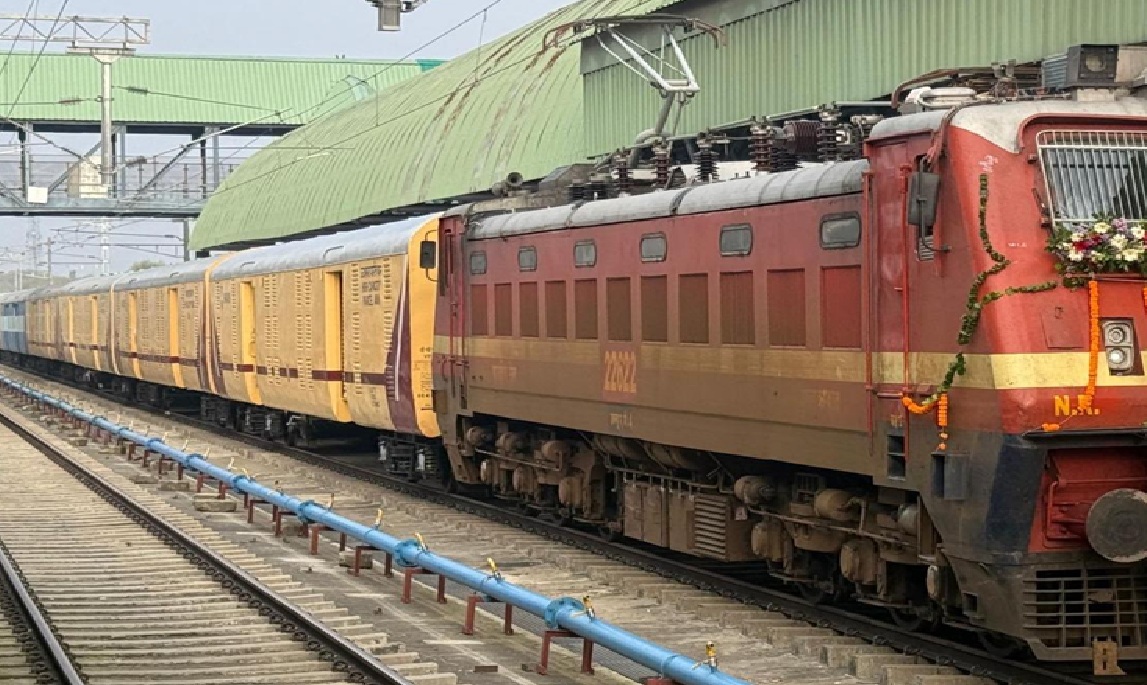
A Newly Developed Terminal Takes Flight
The Anantnag Goods Terminal, which inaugurated just four months ago on August 9, has already emerged as a critical hub for regional commerce. Since its opening, the terminal has successfully facilitated the transport of diverse goods, from cement and industrial products to raw materials and automobiles, establishing itself as a vital link in Northern Railway’s Jammu division.
This food grain shipment marks the terminal’s most significant operation to date, signalling the beginning of a new chapter in the valley’s agricultural and economic development.
Transforming Cost, Speed, and Access
Railway officials underscore the transformative potential of rail-based food grain transport. By shifting from conventional delivery methods to rail networks, the FCI aims to reduce costs significantly while accelerating delivery times to remote areas of Kashmir—regions that have historically faced supply chain challenges.
Uchit Singhal, Senior Divisional Commercial Manager, emphasized the far-reaching benefits of this initiative. “Transporting food grains by rail will be cheaper and faster, directly benefiting both farmers and consumers,” Singhal stated. “This will boost local markets, create employment opportunities, and strengthen the agricultural economy.”
A Ripple Effect for the Valley
Officials believe this development will create a cascading positive impact across Kashmir’s economy. By ensuring uninterrupted food grain supply to remote areas, the initiative addresses a critical vulnerability in the region’s food security framework. Lower transportation costs are expected to ease consumer prices while improving margins for agricultural producers, fostering a healthier market dynamic.
The employment opportunities generated through terminal operations, logistics coordination, and related services promise to strengthen local communities and diversify economic opportunities beyond traditional sectors.
Paving the Path to Food Self-Sufficiency
Singhal characterized the arrival as “another historic achievement,” emphasizing its role in advancing Kashmir’s path toward food self-sufficiency. “This will prove to be a milestone in meeting Kashmir’s food grain requirements and is a significant step toward making the region food self-sufficient,” he said. “It reflects our commitment to the modernization of the railways and the development of the valley.”
The FCI’s commitment to leveraging railway networks for food security extends beyond this single shipment. The corporation is dedicated to effectively managing buffer stocks through efficient logistics, ensuring the general public benefits from stable food supply chains.
Looking Ahead: Expansion and Transformation
This inaugural journey is merely the beginning of an ambitious expansion plan. The FCI and Northern Railway have outlined plans to increase the frequency of food grain trains and extend services to other parts of Kashmir, fundamentally reshaping the region’s logistics landscape.
“In the future, FCI and the railways are planning to expand this service and run more such freight trains to other parts of Kashmir, which will revolutionize logistics and the supply chain across the entire region,” Singhal noted.
The expansion promises to connect previously underserved areas, democratize access to affordable food grains, and position Kashmir as a more integrated player within India’s national agricultural and logistics ecosystem.

A Symbol of Progress
As the historic food grain train makes its journey across the landscape, it carries more than 1,384 tons of sustenance. It represents a commitment to infrastructure development, a bridge between Kashmir and the nation’s economic networks, and a tangible step toward ensuring no community in the valley is left behind in accessing basic food security.
For a region working to strengthen its economic foundations and ensure the welfare of its citizens, this moment signals a new era of possibility and progress.











Leave a Reply