

Punjab and Haryana High Court Imposes Stay on Asset Liquidation Pending Government Response
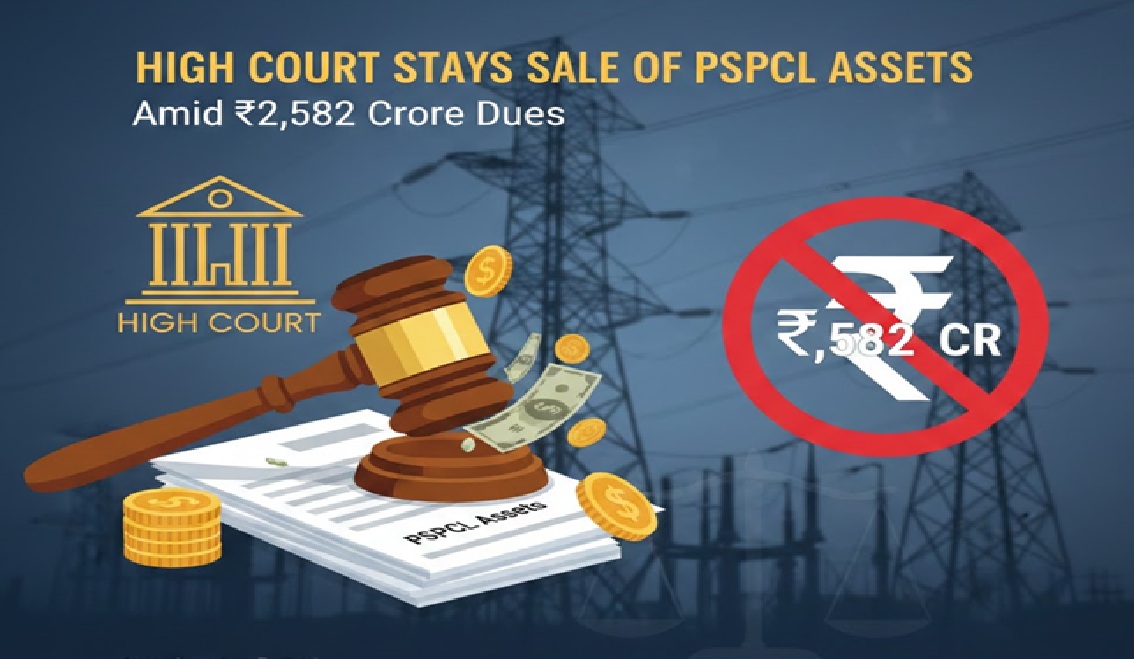
In a significant move addressing financial mismanagement within Punjab’s public sector, the Punjab and Haryana High Court has imposed a stay on the sale of Punjab State Power Corporation Limited’s (PSPCL) assets until further orders. The ruling came following a public interest litigation (PIL) filed by Chandigarh resident Rajbir Singh, who challenged the corporation’s plan to liquidate valuable public assets to recover mounting electricity dues.
The High Court has sought a response from the Punjab government on the petition, signalling serious judicial scrutiny over the proposed asset sales. The court’s decision underscores growing concerns that PSPCL is being forced to bear the financial burden of non-payment by government departments themselves—a situation the petitioner argues is both unfair and potentially illegal.
Outstanding Dues Reach Critical Levels
According to the petition, PSPCL faces a mounting financial crisis stemming from unpaid electricity bills by various government departments. The corporation’s total outstanding dues from Punjab government departments have reached ₹2,582 crore as of August 2025. The situation is exacerbated by an additional ₹10,000 crore in unpaid electricity subsidies owed by the state government itself—a substantial burden that has forced PSPCL to consider drastic measures.
The largest outstanding dues are concentrated among four major departments:
- Water Supply and Sanitation Department
- Local Bodies Department
- Rural Development and Panchayat Department
- Health Department
Fundamental Fairness Question
In his petition, Singh argues that selling PSPCL’s productive assets to cover government dues represents a fundamental breach of fairness and governance principles. “When the government departments themselves are not paying their electricity bills regularly, selling the assets of a public sector undertaking to cover the losses is unfair and illegal,” the petition states, highlighting the logical inconsistency in the proposed solution.
The petitioner contends that the real issue is not PSPCL’s inability to generate revenue, but rather systematic non-payment by government entities that have both the capacity and obligation to settle their bills. Rather than liquidating critical infrastructure assets, Singh argues, the government should enforce strict accountability mechanisms against defaulting departments.
High Court’s Interim Relief
The High Court’s decision to impose a stay on asset sales pending further examination is a significant victory for the petitioner. The court’s directive seeking a response from the Punjab government indicates that judges will closely scrutinize both the propriety of the proposed asset sales and the steps the government has taken to recover dues from defaulting departments.
This interim measure prevents any irreversible action that could compromise PSPCL’s operational capacity while the matter is being adjudicated.
Relief Sought
The petitioner has made several specific requests to the court, seeking comprehensive remedies to address the underlying governance failures. These include:
- An immediate and indefinite stay on any sale of PSPCL’s public assets
- Strict action against defaulting government departments, including disconnection of their electricity connections
- Orders directing the state government to ensure immediate payment of outstanding bills and subsidy amounts
Systemic Governance Concerns
This case highlights a chronic problem in Punjab’s public administration: the tendency to resolve systemic governance failures through measures that harm public interest rather than address root causes. PSPCL, a critical infrastructure provider serving millions of Punjabis, should not be forced to forfeit its productive assets to compensate for the non-payment practices of government departments that have the resources to pay.
The High Court’s stay suggests judicial recognition that the problem is not with PSPCL’s financial viability as an institution, but with the accountability mechanisms that should compel government departments to honour their obligations.

Path Forward
The ball is now in the Punjab government’s court. The state administration must file its response explaining the financial crisis, justifying the decision to pursue asset sales, and detailing efforts to recover dues from defaulting departments. The High Court’s scrutiny will be crucial in determining whether the proposed asset liquidation is a legitimate financial measure or an abdication of governmental responsibility.
Until the court’s final decision, PSPCL’s assets remain protected, preserving the corporation’s long-term operational capacity and safeguarding public interest. The judgment, when delivered, is likely to set important precedents for how other public sector undertakings facing similar financial pressures should address the issue of non-paying government departments.








Leave a Reply