

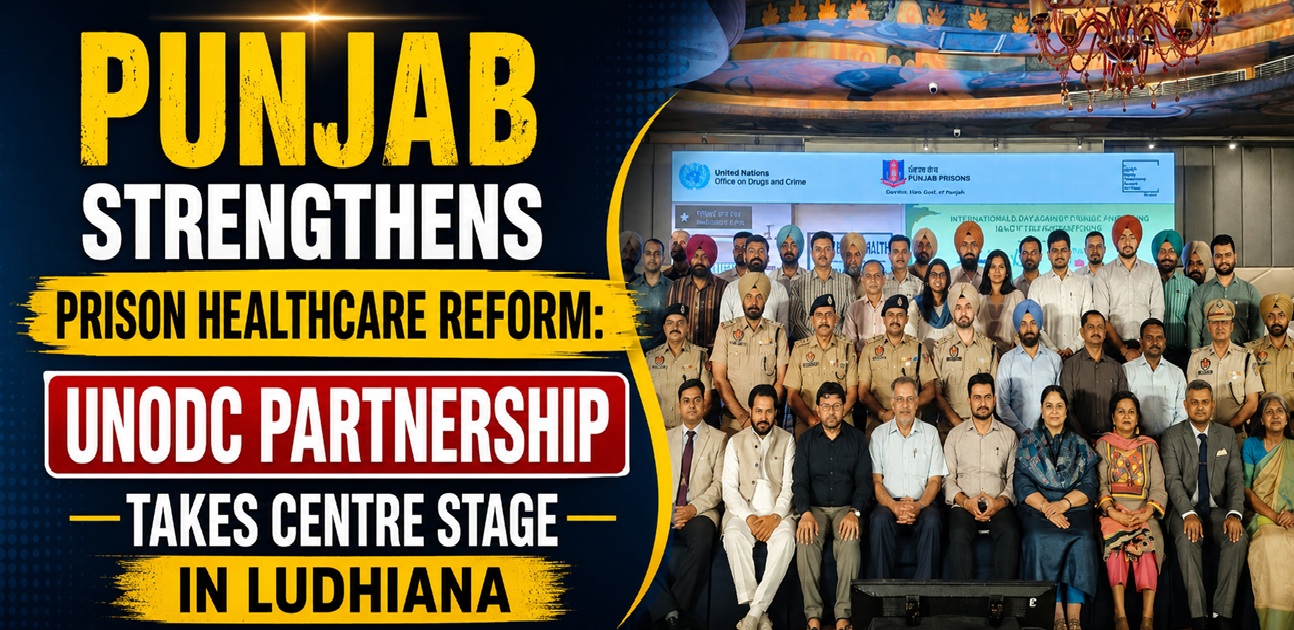
LUDHIANA – In a significant push to transform the state’s correctional landscape, the Punjab government, in collaboration with the United Nations Office on Drugs and Crime (UNODC) and the NGO Turn Your Concern into Action (TYCIA), convened a high-level summit on “Drugs, HIV and Prisoners’ Health” this Friday.
Held in honour of the International Day against Drug Abuse and Illicit Trafficking, the consultation brought together health experts, prison administrators, and policymakers to chart a future where Punjab’s jails serve as centres of recovery rather than mere confinement.
A Paradigm Shift: Treating Patients, Not Just Prisoners
Addressing the inaugural session, Punjab Health and Family Welfare Minister Dr. Balbir Singh underscored a bold shift in state policy: the decriminalization of drug addiction.
“There is a clear distinction between patients and traffickers,” Dr. Singh stated. “In the last 15 months, we have diverted over 10,000 drug-dependent individuals from the judicial system into formal de-addiction centers. We believe that jails must be transformed into centers of treatment, rehabilitation, and recovery.”
The state’s current strategy includes a comprehensive screening initiative that has already processed 25,000 inmates for HIV, Hepatitis, and drug dependency. This medical oversight is supported by a robust network of Opioid Assisted Treatment (OOAT) clinics embedded directly within the prison system, supplemented by psychiatric care and vocational training through ITI courses.
Championing “Corrective Justice”
Jail Minister Dr. Ravjot Singh urged prison officials to elevate their approach to administration, emphasizing that Punjab aims to lead the nation in “corrective justice.”
“For the current government, eradicating drugs from society and providing healthcare to every addict are of equal, paramount importance,” Dr. Singh noted. The meeting featured deep-dive sessions on the evolving challenges of custodial health, ranging from the management of infectious diseases to the specialized needs of female prisoners and those with disabilities.
Aligning with Global Standards
Representing the UNODC, Regional Office for South Asia, Criminal Justice Specialist Seema Joshi highlighted that international best practices view access to healthcare as a fundamental human right.
“Challenges in the drug landscape are constantly evolving, so our solutions must be innovative and adaptive,” Joshi said. She stressed the importance of “continuity of care”—a model that ensures prisoners receive consistent treatment and psychosocial support both during their incarceration and following their transition back into society.

A Unified Path Forward
The summit concluded with a unanimous resolution among all participating departments to adopt a human rights-based, inclusive approach to prison management. By integrating advanced screening protocols, standardized withdrawal management, and continuous mental health support, Punjab is positioning itself to set a new national standard for prisoner rehabilitation.
With the distribution of new educational tools focused on HIV and drug prevention, officials expressed confidence that these collaborative efforts will not only lower drug abuse rates but also foster safer, healthier communities across the state.










Leave a Reply