

Government Restricts BS-6 Vehicle Entry, Targets Vehicular Pollution in Capital
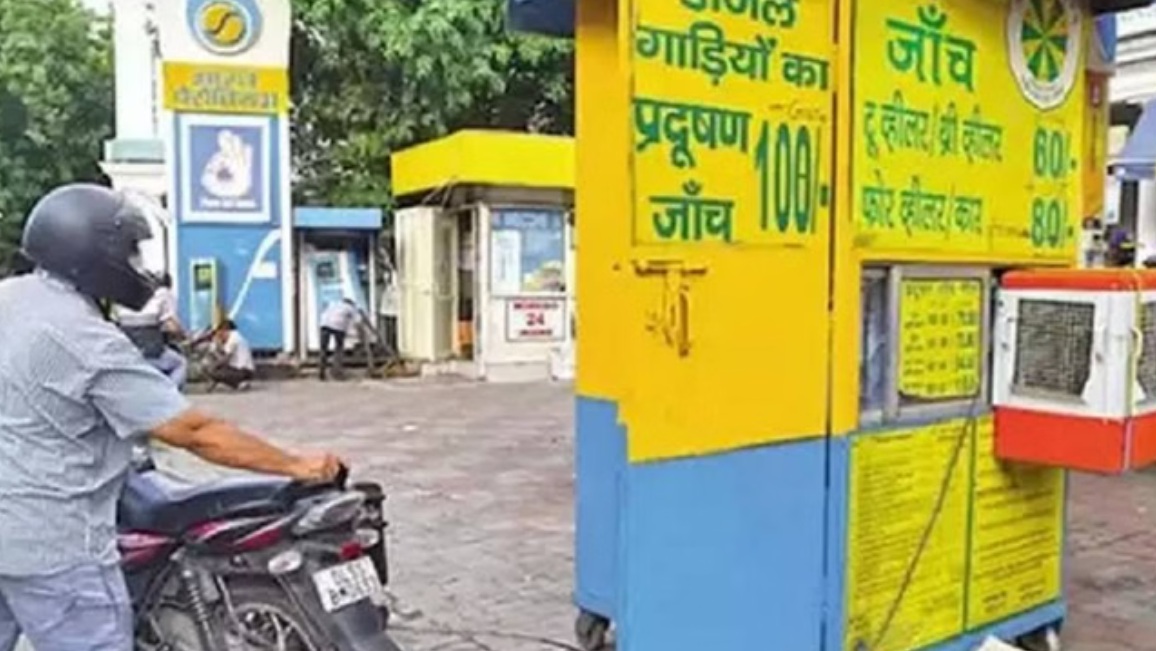
New Delhi — The Delhi government has announced sweeping new measures to combat vehicular pollution, marking what officials are calling the strictest enforcement action yet. From tomorrow, no vehicle without a valid Pollution Under Control (PUC) certificate will be able to purchase petrol, diesel, or CNG at any pump in the capital.
Environment Minister Manjinder Singh Sirsa made the announcement at the Delhi Secretariat, confirming that instructions have been issued to all fuel pump operators across Delhi to implement the new requirement immediately.
A New Enforcement Strategy
The move represents a significant shift in pollution control enforcement. Rather than relying solely on traffic enforcement and vehicle inspections, the government is targeting fuel accessibility—effectively making PUC compliance a precondition for vehicle operation.
“Controlling tailpipe emissions from vehicles is the government’s top priority, and there will be no laxity at any level,” Sirsa stated. The Environment Minister emphasized that vehicle owners must obtain their PUC certificates on time to avoid inconvenience.
Stricter Entry Restrictions on the Horizon
Beyond the immediate PUC mandate, the government has announced additional restrictions that will take effect when pollution levels escalate. Under the Graded Response Action Plan (GRAP) levels 3 and 4—activated during severe air pollution episodes—only BS-6 (Bharat Stage 6) compliant vehicles will be permitted entry into Delhi. All vehicles registered outside the capital and those below BS-4 standards will face outright restrictions.
The measures become even more stringent during GRAP-4 alerts, when vehicles carrying any type of construction material will also be barred from entering the city.
Technology and Enforcement
To ensure compliance, the Delhi government will deploy Automatic Number Plate Recognition (ANPR) systems and conduct special on-ground inspection drives across the capital. These technological and ground-level measures are designed to create a multi-layered enforcement framework that would be difficult to circumvent.
Early Results Show Promise
The Environment Minister highlighted the government’s progress in reducing pollution levels. During the first eight months of the current administration’s tenure, the average Air Quality Index (AQI) has declined noticeably. Notably, even during November—traditionally a critical month for pollution when weather patterns trap pollutants—the average AQI registered approximately 20 points better than in previous years.
“This is a result of continuous action and structural reforms,” Sirsa noted.
Broader Industrial Crackdown
The government’s anti-pollution efforts extend beyond vehicles. The Delhi Pollution Control Committee (DPCC) and other departments have been conducting ongoing operations against polluting industrial units, DG sets, and construction activities. To date, more than 2,000 notices have been issued, with penalties exceeding ₹9.21 crore imposed on violating facilities.

What Vehicle Owners Need to Know
With the new mandate taking effect immediately, vehicle owners in Delhi are urged to ensure their PUC certificates are current and valid. The government has made clear that compliance will be non-negotiable, and fuel pump operators have been instructed to deny service to vehicles without valid certificates.
The announcement underscores the Delhi government’s commitment to improving air quality through aggressive vehicular emission controls, tackling what has long been identified as a major contributor to the capital’s seasonal air pollution crisis.
For more information on obtaining or renewing your PUC certificate, vehicle owners are advised to contact their nearest Pollution Testing Centre or visit official Delhi government resources.






Leave a Reply