

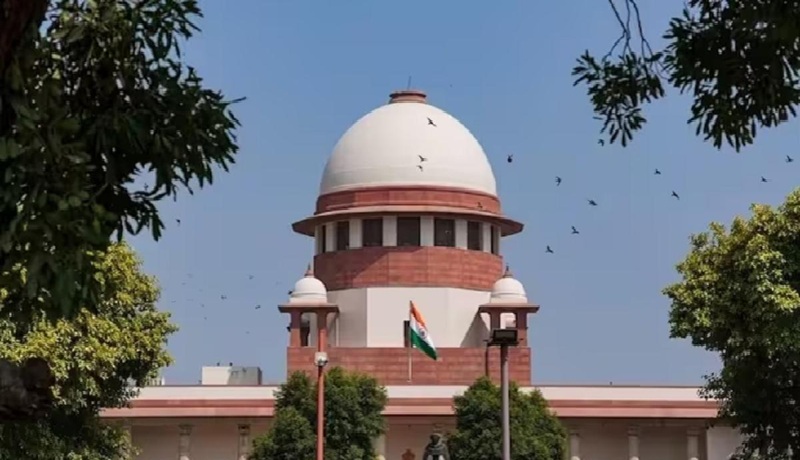
NEW DELHI — In a strong assertion of educational integrity, the Supreme Court has imposed substantial penalties on 10 private dental colleges in Rajasthan for systematically violating admission rules for the Bachelor of Dental Surgery (BDS) program. The landmark judgment, delivered by a bench of Justices Vijay Bishnoi and J.K. Maheshwari, mandates a ₹10 crore fine on each institution, alongside a separate ₹10 lakh penalty on the Rajasthan government for its complicity.
The Case: A Clear Pattern of Violations
The controversy centres on the admission process for BDS seats through the NEET examination, where a minimum qualifying percentage is mandatorily prescribed. However, the Rajasthan government, acting without statutory authority, granted an additional exemption of 10 percent to this benchmark. Compounding this irregularity, a further 5 percent exemption was subsequently authorized, creating a 15 percent cumulative relaxation.
The consequences were far-reaching. Many students who fell short of the prescribed eligibility criteria were granted admission under these unauthorized exemptions. Most troublingly, several colleges went beyond even these lenient provisions, admitting candidates in complete violation of established norms and thereby severely compromising the calibre of medical education.
Court’s Scathing Observations
During the hearing, the Supreme Court made forceful remarks regarding the conduct of the colleges and state authorities. The bench observed that the colleges had openly and deliberately disregarded the 2007 regulatory rules. The court further noted that the state government not only granted unauthorized exemptions but also failed to implement directives from the central government and the Dental Council of India in a timely manner.
The justices expressed considerable displeasure at the institutional and governmental failures, emphasizing that such violations undermine the foundational standards of medical education and ultimately harm the quality of healthcare professionals produced by these institutions.
Relief for Students, But With Conditions
Recognizing the difficult position of students admitted under the irregular process, the Supreme Court exercised its discretionary powers to grant humanitarian relief. The court regularized the BDS degrees of all students admitted during the 2016-17 academic session, allowing them to retain their qualifications despite the procedural irregularities that facilitated their admission.
However, this relief comes with significant conditions. Students who benefit from this decision have been directed to file affidavits with the Rajasthan High Court affirming their commitment to provide free medical and dental services to the state during any disaster, epidemic, or public health emergency. This provision ensures that while students are protected, they undertake a meaningful obligation to serve the public good.
Financial Consequences and Social Impact
All 10 colleges have been directed to deposit their respective ₹10 crore fines within eight weeks. The combined ₹100 crore, along with the ₹10 lakh from the state government, will be channelled toward socially significant welfare initiatives. Specifically, the funds will support the establishment and maintenance of One Stop Centres for women in distress, Nari Niketans (women’s shelters), old age homes, and child care institutions across Rajasthan.
This financial penalty structure transforms a punitive measure into a constructive investment in social welfare, ensuring that the consequences of regulatory failure translate into tangible benefits for vulnerable populations.

Broader Implications
The verdict represents a significant statement by the judiciary on maintaining educational standards and institutional accountability. It underscores that neither colleges nor state governments can arbitrarily relax admission norms without proper authorization, and that such violations carry substantial consequences. The judgment also sets a precedent that regulatory bodies must enforce prescribed standards consistently and transparently.
For the dental education sector in Rajasthan and across India, the ruling serves as a cautionary reminder that excellence in medical education cannot be compromised for enrolment numbers or political convenience. The Supreme Court’s firm stance signals that institutional integrity and public health considerations will take precedence over other considerations.
The Supreme Court’s judgment balances accountability with pragmatism, ensuring that wrongdoing is punished while protecting students caught in administrative failures from bearing the consequences of decisions they did not make.






Leave a Reply