

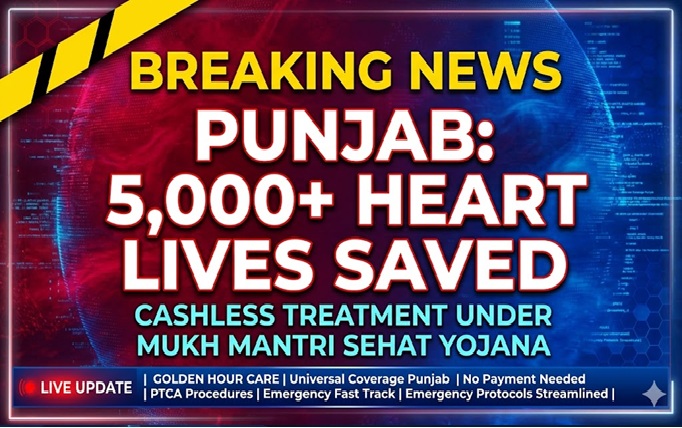
CHANDIGARH – In a significant milestone for public healthcare in Punjab, the Bhagwant Mann government’s Mukh Mantri Sehat Yojana has successfully provided life-saving cardiac care to over 5,000 patients. By eliminating the financial barriers that often delay emergency surgery, the scheme is fundamentally changing the survival rate for heart attack victims across the state.
According to the latest data from the State Health Agency, a total of 5,054 heart surgeries have been performed under the scheme in recent months. This includes 5,000 percutaneous transluminal coronary angioplasty (PTCA) procedures and 54 peripheral angioplasties, totalling an investment of ₹49.6 crore in public health.
Winning the Battle Against Time
In the medical world, the first 60 minutes following a heart attack are known as the ‘Golden Hour.’ Historically, many families lost this precious time attempting to arrange funds, navigate insurance paperwork, or seek approval from hospital administrators.
The Mukh Mantri Sehat Yojana has effectively dismantled these roadblocks. Under the new health card system, patients arriving at government or empanelled private hospitals are fast-tracked into surgery.
“Now, more patients are surviving conditions that were previously considered life-threatening,” said Punjab Health Minister Dr. Balbir Singh. “The speed of treatment facilitated by the health card system is becoming the state’s ultimate lifesaver.”
A Changing Demographic: Youth at Risk
The success of the scheme comes at a critical time. Doctors across Punjab report a worrying shift in cardiac demographics: heart disease is no longer an “elderly person’s ailment.”
-
Rising Cases in Youth: Sedentary lifestyles, high stress levels, and poor dietary habits are driving a surge in heart attacks among Punjab’s younger population.
-
Comorbidities: Increasing rates of diabetes and hypertension are acting as catalysts for early-onset cardiac distress.
Dr. Saurabh Sharma noted that the psychological relief of the scheme is as important as the medical one. “The hesitation that used to arise regarding the cost of treatment has been eliminated. Families no longer face a dilemma during a crisis; they can focus entirely on the patient’s recovery.”
Strengthening the Healthcare Infrastructure
To support the influx of patients, the state is rapidly modernizing its cardiology departments. Key improvements include:
-
Streamlined Protocols: Emergency rooms have been reconfigured to bypass administrative hurdles for suspected heart attack cases.
-
Localized Access: By empanelling more hospitals in smaller districts, the government has reduced the need for dangerous, long-distance referrals to major cities.
-
Cashless Seamlessness: The “treatment first, payment later” model ensures that no patient is turned away due to a lack of immediate funds.

Global Context, Local Solution
With the World Health Organization (WHO) reporting nearly 17.9 million deaths annually from cardiovascular diseases, Punjab’s proactive model offers a blueprint for regional health management. By prioritizing emergency angioplasty and making it accessible to all, the state is not just treating a disease—it is preserving the economic and emotional stability of thousands of families.
As the program expands, health officials remain focused on one goal: ensuring that in Punjab, a person’s heartbeat is never stopped by the weight of their wallet.












Leave a Reply