

Washington/Caracas — US President Donald Trump issued a stark warning on Saturday declaring the airspace over and around Venezuela “completely closed,” marking a dramatic escalation in tensions between Washington and Caracas as the Trump administration intensifies pressure on Venezuelan President Nicolás Maduro.
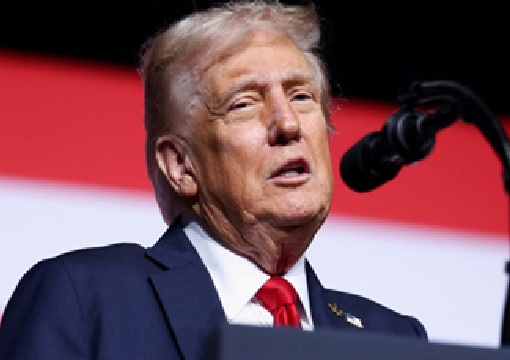
In a post on his Truth Social platform, Trump directed his message to airlines, pilots, drug dealers, and human traffickers: “Please consider the airspace over and around Venezuela completely closed in its entirety.” The declaration comes as the United States deploys significant military assets to the Caribbean region and expands operations against what it describes as drug trafficking networks.
Military Deployment Raises Stakes
The warning follows the deployment of the USS Gerald R. Ford, the world’s largest aircraft carrier, to the Caribbean last week—representing the most substantial US military buildup in the region in decades. The carrier strike group is part of what the Trump administration characterizes as an anti-narcotics operation targeting Venezuelan drug smuggling routes.
Since early September, US forces have conducted strikes against more than 20 alleged Venezuelan drug-smuggling vessels in the Caribbean Sea and eastern Pacific Ocean, resulting in over 80 deaths. The military actions have drawn sharp condemnation from United Nations experts, who have questioned the legality and proportionality of the strikes.
Aviation Industry Responds
The Federal Aviation Administration warned airlines last week of a “potentially hazardous situation” in Venezuelan airspace, citing a deteriorating security environment and heightened military activity. In response, six major international carriers—Spain’s Iberia, Portugal’s TAP, Colombia’s Avianca, Chile and Brazil’s LATAM, Brazil’s GOL, and Turkish Airlines—suspended flights to Venezuela.
The Venezuelan government retaliated by banning these airlines from operating in its airspace, further isolating the country from international air travel networks.
Maduro Defiant Amid Pressure
In a nationally televised address on Thursday, President Maduro struck a defiant tone, declaring that Venezuelans “are not afraid” of US threats. He accused Washington of fabricating pretexts and spreading false information to justify interference in Venezuelan sovereignty.
“The US is making excuses and spreading lies to justify its interference in Venezuela,” Maduro said, framing the escalating crisis as an attempt at regime change rather than legitimate counter-narcotics operations.
Human rights observers and regional experts have echoed these concerns, warning that the Trump administration’s actions appear designed to lay groundwork for Maduro’s removal from power—a charge Washington has not explicitly denied.
Unexpected Diplomatic Outreach
Despite the heightened rhetoric, reports emerged Friday that Trump spoke with Maduro last week in an unexpected diplomatic contact. According to The New York Times, citing multiple sources, the two leaders discussed the possibility of a meeting in the United States, though no such encounter has been scheduled.
If realized, it would mark the first face-to-face meeting between Maduro and a sitting US president—a potentially significant development given years of hostile relations between the two nations.

Regional and International Implications
The escalating confrontation has sent ripples through Latin America and the Caribbean, where memories of past US military interventions remain fresh. Regional organizations have largely remained silent on the crisis, reflecting deep divisions over how to address Venezuela’s ongoing political and humanitarian challenges.
Venezuela has been under US sanctions for years, with Washington refusing to recognize Maduro’s 2018 re-election as legitimate. The Trump administration has steadily increased economic pressure and diplomatic isolation, but the recent military deployment and airspace declaration represent a qualitative shift in approach.
As of Saturday evening, there was no immediate official response from the Venezuelan government to Trump’s latest social media declaration. However, given the pattern of escalating rhetoric from both sides, analysts expect Caracas to issue a formal response condemning what it will likely characterize as a violation of international law and Venezuelan sovereignty.
The situation continues to develop, with uncertainty surrounding both the scope of potential US military action and the possibility of diplomatic engagement between the two adversarial leaders.
Last updated: Saturday, November 29, 2025




Leave a Reply